What to Expect From No-Money-Down Excavator Financing
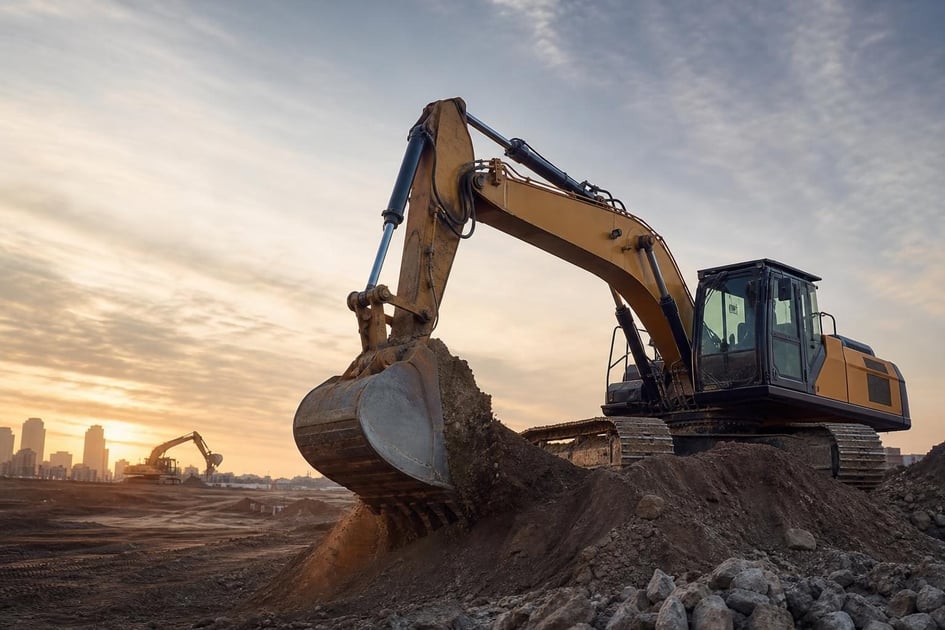
You can finance an excavator without a down payment if the machine qualifies as collateral and your business profile supports the monthly payment. At Provide Capital, the equipment itself secures the financing, which means you can preserve working capital for labor, fuel, and job materials while still taking delivery. Approval amounts range from $5,000 to $5 million, covering everything from compact mini excavators to full-size crawler models. Rates vary by credit profile, equipment age and term. Same-day approvals are possible when your documentation is complete and the equipment is less than ten years old.
Key Insight: Because the excavator serves as collateral, lenders can finance the full purchase price without requiring additional real estate or blanket liens on your entire operation. This is fundamentally different from an unsecured working capital loan, where the lender has no hard asset to recover if you default. The serial number, hour meter reading, and recent maintenance records often matter more than your personal credit score when determining approval amount.
Already have a machine in mind?
Provide Capital finances new and used equipment from $5,000 to $5 million, with same-day decisions possible.
Apply NowHow "No Money Down" Actually Works
The phrase means different things depending on the lender and the structure. In equipment financing, it typically refers to 100% financing of the machine's purchase price. You may still pay for delivery, a bucket or thumb attachment, or first-and-last-month payments upfront, but you are not tying up tens of thousands in a traditional down payment.
Zero Down vs. 100% Financing
Zero down means you bring no cash to the closing table. One-hundred-percent financing means the lender covers the machine plus approved soft costs, but you may still need to cover taxes or transportation. Ask your financing specialist exactly what is rolled into the note so you are not surprised by a $2,500 freight bill after you have already committed to the purchase.
Why the Equipment Secures the Deal
Excavators retain value well. A three-year-old 20-ton model with 2,000 hours can still command 60% to 75% of its original price on the secondary market. That residual value protects the lender, which is why they can offer aggressive advance rates. If you are financing a Mini Excavator financing package for a landscaping crew, the same logic applies on a smaller scale.
The Application and Approval Process
Most equipment financing applications take fifteen to thirty minutes to complete. You will provide basic business information, the equipment details, and permission to pull credit. For transactions under $150,000, many lenders rely on bank statements and a simple credit check rather than full financials, a streamlined approach that differs from the longer underwriting typical of SBA loan programs.
What Triggers a Same-Day Decision
Same-day approvals are possible when the transaction is straightforward: established business, clean credit, clear equipment title, and a seller who responds quickly to verification requests. If you are buying at auction, from a private party, or importing a machine, expect the timeline to stretch by a few days while the lender verifies ownership and condition.
By the Numbers: Provide Capital finances equipment from $5,000 to $5 million. A mid-size 20-ton excavator with a thumb attachment and auxiliary hydraulics typically falls in the $75,000 to $180,000 range depending on age and hours. For established contractors with two or more years in business and equipment under five years old, approval amounts often cover 100% of the purchase price plus soft costs like delivery and initial attachment packages.
New vs. Used Excavators: Financing Trade-offs
New machines qualify for longer terms and lower rates because the collateral risk is lower. Used machines save money upfront but may carry slightly higher rates or shorter amortization schedules. The sweet spot for many owner-operators is a late-model used machine between 1,000 and 3,000 hours.
| Factor | New Excavator | Used Excavator (1,000–3,000 hrs) |
|---|---|---|
| Financing term | Up to 84 months | Usually 36–60 months |
| Rate structure | More competitive | Rates vary by credit profile, equipment age and term |
| Collateral value | Highest | Strong, with maintenance records |
| Warranty | Full manufacturer coverage | Limited or expired |
| Typical monthly payment on $120k | $1,650–$2,100 over 72 mos | $1,850–$2,400 over 60 mos |
The exact payment depends on your credit, time in business, and the specific machine. Use the table as a directional guide, not a quote. If you have a specific machine in mind, see what you qualify for before you negotiate the purchase price. Knowing your approved budget gives you leverage at the dealership or auction.
Qualification Criteria in Detail
Lenders look at four pillars: credit, time in business, equipment condition, and cash flow. You do not need perfect credit, but you do need a plausible story about how the machine will generate revenue.
Credit Profile
A score in the mid-600s or higher opens the most favorable terms. Scores below that do not automatically disqualify you, but they may shorten the term or require a slightly larger security deposit. Recent bankruptcies, open tax liens, or judgments within the past two years are harder to overcome without significant compensating factors.
Time in Business
Two years is the standard threshold for the best programs. If you have been operating for less than two years, you can still qualify, especially if you are buying new or nearly new equipment and you have relevant industry experience. A foreman going out on his own with five years of operating history is a different risk than a complete newcomer.
Equipment Age and Condition
Most lenders cap financing at equipment that is ten to fifteen years old at the end of the term. If you want a 60-month loan on a 2015 machine, the lender will check that the machine will be no older than their policy limit when the note matures. High-hour machines over 8,000 hours may require a larger equity position or a shorter amortization.
Pro Tip: If you are buying used, obtain the maintenance records before applying. Lenders want to see that the hydraulic system, undercarriage, and engine have been serviced at the manufacturer-recommended intervals. A 3,000-hour machine with documented PMs often finances more favorably than a 2,000-hour machine with no records, because the collateral value is easier to verify.
Lease vs. Loan: Which Structure Fits?
An equipment loan puts the title in your name immediately, with the lender holding a lien. A finance lease is essentially a loan with a nominal purchase option at the end. A true operating lease lets you return the machine at term end. For excavators, most contractors choose a loan or finance lease because they intend to keep the machine for its full useful life.
| Feature | Equipment Loan | Finance Lease | True Operating Lease |
|---|---|---|---|
| Ownership | You own; lender has lien | You own at end | Lessor owns throughout |
| Down payment | Often $0 | Often $0 | Sometimes one payment upfront |
| End-of-term | Title release | $1 or 10% buyout | Return or fair-market buyout |
| Tax treatment | Depreciation or Section 179 | Similar to loan | Payments expensed |
| Best for | Long-term ownership | Long-term ownership | Short-term projects |
If you plan to run the excavator for five to seven years, a loan or finance lease is usually the better economic choice. If you need a specialized attachment for a nine-month infrastructure project and then want to walk away, an operating lease deserves a look.
Find the right financing structure
Tell us about the equipment you need and we will show you the options that fit your business.
See Your OptionsTax Treatment for the 2026 Tax Year
The 2026 tax year offers significant incentives for equipment acquisition, but the exact limits and phase-out thresholds should be verified with a CPA before you sign. Section 179 allows qualifying businesses to deduct the full purchase price of eligible equipment in the first year, subject to annual limits that adjust for inflation. For 2026, consult your accountant on the current-year ceiling and whether your taxable income supports the full deduction.
Bonus depreciation may also apply to new and used excavators placed in service during the 2026 tax year, though the percentage has been phasing down from previous years. Again, a CPA can model whether bonus depreciation, Section 179, or standard MACRS depreciation produces the best outcome for your specific bracket and cash-flow needs.
Pro Tip: Work with a CPA before you sign. The 2026 tax year rules around Section 179 and bonus depreciation can change how you structure the deal. A loan may let you deduct the full purchase price in year one, while a true lease may spread deductions across the term. Your CPA can model which approach preserves more cash flow based on your current tax bracket and projected 2026 income.
Industry-Specific Use Cases
Excavators are not just for highway contractors. Owner-operators across several industries use Excavators financing to expand capacity without draining cash reserves. Strong demand across sectors is reflected in Reuters business spending coverage, which tracks capital investment trends that directly affect contractor equipment needs.
Construction and Site Development
General contractors use 20-ton to 30-ton excavators for foundation digging, utility trenching, and grading prep. In commercial site work, having your own iron instead of renting by the hour directly affects your bid competitiveness, especially as U.S. Census Bureau construction data shows continued investment in infrastructure and non-residential projects. Construction equipment financing lets you put the machine to work immediately while paying it out over the jobs it enables.
Landscaping and Hardscaping
Mini excavators with grading buckets and hydraulic thumbs have become essential for retaining-wall builders and pool installers. A 3.5-ton machine fits through standard gates and can be trailered behind a half-ton truck. Financing keeps your liquid cash available for seasonal payroll spikes and material purchases.
Agriculture and Forestry
Farmers use excavators for pond maintenance, fence-line clearing, and drainage work. Forestry crews need them for trail building and stump removal. In both cases, the machine earns its keep during narrow seasonal windows. No-money-down financing means you can deploy the excavator at planting or harvest without diverting cash from seed or fertilizer.
Demolition and Recycling
Demolition contractors pair excavators with specialized grapples and hydraulic breakers. Because the attachment can cost as much as the base machine, rolling both into a single financing package simplifies bookkeeping and preserves leverage.
Common Mistakes Owner-Operators Make
Avoid these pitfalls when structuring your deal:
- Overlooking soft costs. Freight, attachments, and initial insurance can add 8% to 12% to the total project cost. Make sure your financing request covers the full out-the-door number.
- Buying too much machine. A 35-ton excavator looks impressive, but if 80% of your work is residential utility trenches, you are burning fuel and financing dollars on unused capacity.
- Ignoring the undercarriage. On tracked machines, undercarriage replacement can cost $15,000 to $25,000. If you are buying used, budget for this or negotiate a lower purchase price.
- Waiting too long to apply. If you have a job starting Monday and you apply Friday afternoon, even same-day approvals are possible only if the seller is responsive and the title is clean. Apply as soon as you identify the machine.
- Not comparing total cost of ownership. A lower monthly payment on an 84-month term looks attractive, but you may owe more than the machine is worth for the first four years. Match the term to your realistic ownership horizon.
Documentation You Will Need
Having these items ready speeds up the process:
- Business tax returns for the past one to two years
- Three to four months of recent business bank statements
- Current personal financial statement or personal tax return
- Equipment quote or purchase agreement with serial number, year, make, model, and hours
- Proof of insurance naming the lender as loss payee
- Seller's contact information and, for private-party sales, proof of clear title
For transactions over $250,000, expect to provide more detailed financials, including a current balance sheet and year-to-date profit and loss statement.
What Happens After Approval
Once approved, the process moves quickly:
- Doc signing. You will receive closing documents via DocuSign or similar. Review the payment schedule, prepayment penalties, and insurance requirements.
- Funding. After you sign, the lender wires funds directly to the seller or issues a check. This usually happens within 24 to 48 hours.
- Title and lien filing. The lender files a UCC-1 financing statement against the equipment. You receive a copy for your records.
- Insurance verification. You must bind equipment insurance before the machine leaves the lot.
- First payment. Depending on the structure, your first payment may be due 30 to 45 days after funding.
At Provide Capital, we work with construction, healthcare, dental, restaurant and food service, manufacturing, transportation, agriculture, HVAC, and forestry businesses nationwide. Whether you need a Dump Trucks financing package to haul spoils or an excavator to dig the foundations, the process is the same: equipment-backed financing from $5,000 to $5 million with competitive rates and fast decisions.
Put the right equipment to work
From $5,000 to $5 million, new or used, Provide Capital helps businesses nationwide finance the equipment they need.
Apply TodayFrequently Asked Questions
Can I really get excavator financing with no money down?
Yes, if your credit and business history support the monthly payment and the equipment qualifies as collateral. The lender finances the purchase price, and you start making monthly payments without a large upfront cash outlay.
Does a low credit score automatically disqualify me?
No, but it may affect the term, rate, or required documentation. Scores in the mid-600s and above receive the most favorable structures. Lower scores are evaluated case by case.
Can I finance a private-party sale?
Yes, but the lender will verify the title is clear and the seller owns the machine free and clear. Private-party transactions sometimes take an extra day or two for title verification.
What equipment ages will you finance?
Most programs prefer equipment that will be no more than ten to fifteen years old at the end of the term. A five-year-old excavator on a 60-month note is usually acceptable. A fifteen-year-old machine on a 60-month note is harder to place.
Can I include attachments in the financing?
Yes. Buckets, thumbs, hydraulic breakers, and grapples can often be rolled into the same note if they are part of the initial purchase. This simplifies your bookkeeping and preserves cash.
Is there a prepayment penalty?
It depends on the specific program. Some loans allow you to pay off early with no penalty; others include a nominal charge to cover origination costs. Ask your specialist to point out the prepayment language before you sign.
How fast can I get funded?
Same-day approvals are possible for straightforward deals, and funding typically occurs within 24 to 48 hours after you sign closing documents. Complex transactions or private-party sales may take slightly longer.
Can I finance multiple machines at once?
Yes. If you are building a fleet, you can bundle several pieces of equipment into one approval package. Provide Capital finances transactions from $5,000 to $5 million, so fleet deals are well within scope.
Ready to Put an Excavator to Work?
No-money-down excavator financing is not a gimmick. It is a straightforward way to turn a monthly payment into revenue-generating capacity. The machine secures the note, you keep your cash for operations, and you own a depreciating asset that earns its keep on every job site.
If you have identified the excavator you want, get a same-day decision on your equipment by applying now. Our team understands the construction, agriculture, and forestry markets, and we can structure a package that matches your work cycle.
Not sure which machine fits your budget? Talk to a specialist about your specific machine and we will walk you through the numbers—no obligation, no hard sell. We finance new and used business equipment nationwide, and we are ready when you are.
Disclaimer: The information provided in this article is for general educational purposes only and is not financial, legal, or tax advice. Funding terms, qualifications, and product availability may vary and are subject to change without notice. Provide Capital does not guarantee approval, rates, or specific outcomes. For personalized information about your business funding options, contact our team directly.