What "No Money Down" Actually Means for Forklift Financing
No money down does not mean no cost to borrow. It means you can finance 100 percent of the forklift's purchase price and roll the sales tax, delivery, and installation into the note. The lender secures the loan by filing a UCC-1 lien against the equipment itself. Because the forklift serves as collateral, lenders can offer competitive structures without requiring a separate cash deposit from the borrower.
Rates vary by credit profile, equipment age and term. A borrower with strong credit financing a late-model electric forklift over 36 months will see different numbers than a newer operation choosing a 10-year-old propane unit over 60 months. Same-day approvals are possible when the application arrives with complete documentation and a clean equipment quote, but they are never guaranteed.
Key Insight: Lenders treat the forklift's serial number and hour meter like an odometer on a truck. A unit with 8,000 hours and a full maintenance log often finances more cleanly than a low-hour machine with gaps in service history, because resale value drives the collateral decision.
Already have a machine in mind?
Provide Capital finances new and used equipment from $5,000 to $5 million, with same-day decisions possible.
Apply NowHow Forklift Financing Works at Provide Capital
Provide Capital finances new and used business equipment from $5,000 to $5 million. That range covers everything from a single warehouse pallet jack to a full fleet replacement for a regional distributor. The equipment itself is the collateral, which keeps rates competitive and removes the need for additional real estate or inventory liens.
The process starts with a commercial equipment quote. You submit the quote, a one-page application, and three months of business bank statements. An underwriter reviews the transaction rather than digging through every line of your business plan. Decisions typically come back within hours, and funding can follow the same day once the title and insurance are verified.
See what you qualify for with no impact to your personal credit score during the initial review.
Who Qualifies for Zero-Down Forklift Financing
Approval turns on three factors: credit history, time in business, and the quality of the collateral. Lenders are not looking for perfection; they are looking for evidence that the new payment fits inside the business's cash flow.
Credit Profile
A FICO score above 650 opens the best terms, but scores in the low 600s often still qualify with a slightly shorter term or a stronger equipment selection. Bankruptcies discharged less than two years ago, open tax liens without a payment plan, or recent judgments will usually require additional explanation. Personal credit matters because most small business owners personally guarantee equipment debt.
Time in Business
Two years in operation is the standard benchmark, though some transactions fund for younger companies when the owner has industry experience and the equipment is essential to revenue. A construction contractor replacing a blown engine on their only forklift is a different risk profile than a brand-new LLC buying a luxury office chair.
Equipment Age and Type
Lenders prefer forklifts under 10 years old with documented service records. Electric units with newer battery technology sometimes command better terms than internal-combustion machines because of lower maintenance costs and longer residual life. The underwriter will verify the make, model, year, and serial number against the quote before releasing funds.
Pro Tip: If you are buying used, ask the dealer for the hour meter reading and the last inspection report before you apply. Underwriters routinely request both, and having them ready prevents the back-and-forth that turns a same-day approval into a three-day wait.
New vs. Used Forklifts: Financing Differences
New forklifts carry full manufacturer warranties and predictable maintenance schedules, which lenders like. Used forklifts cost less upfront and depreciate more slowly, but they carry higher risk if the hour meter is high or the brand has weak parts availability in your region.
| Factor | New Forklift | Used Forklift |
|---|---|---|
| Purchase price | $25,000 – $60,000+ | $10,000 – $35,000 |
| Financing term range | 36 – 72 months | 24 – 60 months |
| Rate impact | Lower risk, better rate | Rates vary by credit profile, equipment age and term |
| Warranty | Full manufacturer coverage | Limited or expired; consider service contract |
| Tax treatment | Full purchase price eligible for 2026 Section 179 deduction | Same eligibility, subject to 2026 limits; consult your CPA |
| Best for | High-hour operations, warranty needs | Budget-conscious buyers, backup units |
Forklifts financing covers both paths. The right choice depends on how many hours per day the machine will run and whether you have in-house maintenance capability.
Lease vs. Loan: Which Structure Fits Your Operation?
A $1 buyout lease and an equipment finance agreement look similar on the surface—both give you a monthly payment and eventual ownership—but the tax and balance-sheet treatment diverges. A true lease, or fair market value lease, treats the forklift as a rental. You expense the payments, but you do not own the unit at the end unless you pay the residual. A loan or $1 buyout lease puts the asset on your balance sheet and lets you depreciate it.
| Feature | Equipment Loan / $1 Buyout | Fair Market Value Lease |
|---|---|---|
| Ownership at end | Yes | Optional residual payment |
| Monthly payment | Higher | Lower |
| Tax treatment | Depreciation + interest deduction; 2026 Section 179 may apply | Payment expensed; consult your CPA for 2026 rules |
| Balance sheet | Asset and liability recorded | Off-balance-sheet in many cases |
| Upgrade flexibility | You sell or trade | Return and lease new unit |
| Best for | Long-term fleet assets | Rapidly changing technology or seasonal needs |
Tax Treatment for 2026
For tax year 2026, businesses that purchase forklifts may be eligible to deduct the full cost under Section 179 in the first year, subject to annual dollar limits and taxable income caps that adjust yearly. Because the 2026 limits are set by inflation adjustments and Congressional action, you should consult your CPA for the exact threshold before you file.
Bonus depreciation may also apply to new and used qualifying equipment in 2026, though the percentage has been stepping down from prior years. Again, your CPA can confirm the exact rate for tax year 2026 and whether your state conforms to federal treatment. Never make a $40,000 equipment decision based on a blog post; run the numbers with a professional who knows your full tax picture.
Cost Examples: What the Payments Look Like
The examples below illustrate possible structures for a borrower with good credit. Rates vary by credit profile, equipment age and term, so treat these as directional only.
Example 1: Single Used Warehouse Forklift
A distributor buys a 2019 electric sit-down forklift for $22,000. With tax and delivery rolled in, the total financed amount is $24,500. On a 48-month term, the monthly payment lands near $575. Over the life of the contract, the business pays roughly $3,100 in finance charges.
Example 2: New Multi-Purpose Forklift for Construction
A construction contractor purchases a new rough-terrain telehandler for $58,000. Financed over 60 months with zero down, the monthly payment runs approximately $1,150. The longer term keeps the payment below the revenue the machine generates on a single busy week.
Example 3: Fleet Refresh for a Manufacturer
A metal fabricator replaces three aging propane forklifts with new cushion-tire units totaling $135,000. Structured as a 36-month equipment finance agreement, the combined monthly payment is about $4,100. The shorter term minimizes total interest and aligns with the manufacturer's plan to own the fleet free and clear before expanding the building.
By the Numbers: Financing $50,000 over 60 months instead of 36 months drops the monthly payment by roughly 35 percent, but it increases the total interest paid by approximately 60 percent. If your cash flow can handle the shorter term, the savings are substantial.
See what you qualify for
The equipment itself secures the financing, which keeps rates competitive. Checking your options takes minutes.
Check Your OptionsIndustry-Specific Forklift Use Cases
Forklifts are not one-size-fits-all. The right machine for a refrigerated warehouse differs from what a lumberyard needs. Equipment financing is one of the most common ways small businesses acquire machinery. According to the Small Business Administration loan programs, equipment loans are structured around the asset itself, which reduces the lender's risk and the borrower's upfront cash requirement.
Warehousing and Distribution
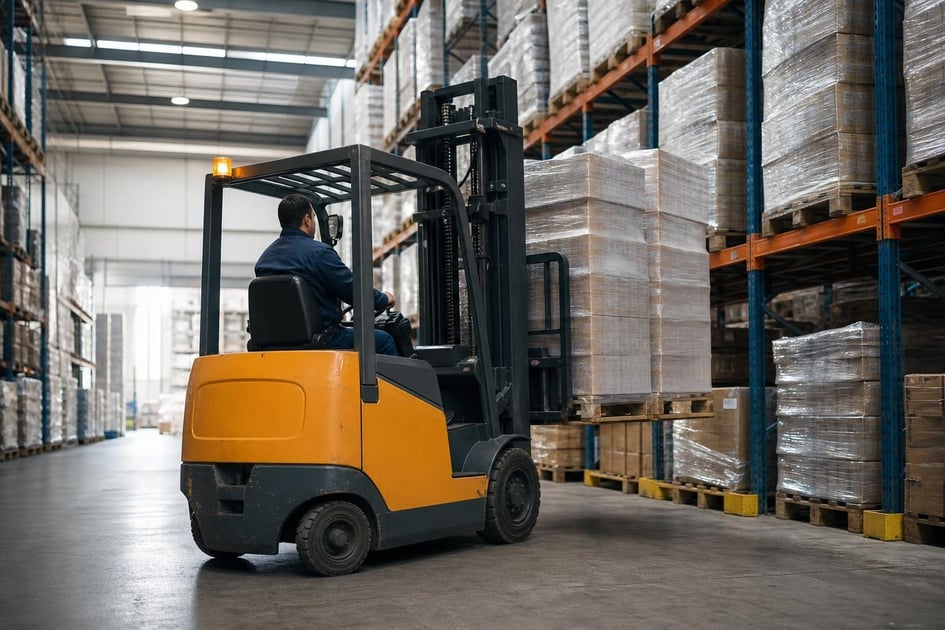
Electric forklifts with three-stage masts dominate indoor warehousing. They run quietly, emit zero exhaust, and cost less per hour to operate than propane or diesel units. Financing a $30,000 electric forklift over 48 months keeps the monthly cost below the salary of a single part-time warehouse associate.
Construction
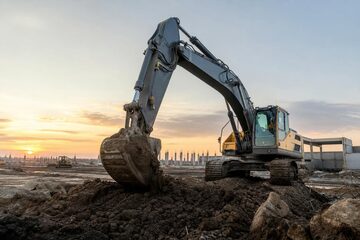
Rough-terrain forklifts and telehandlers move material across uneven ground. These machines start around $35,000 used and climb past $80,000 new. Construction equipment financing through Provide Capital covers these units with structures built around seasonal cash flow.
Manufacturing
Manufacturers often need specialized attachments: drum handlers, paper-roll clamps, or double pallet handlers. The attachment cost can add $3,000 to $8,000 per machine. Roll that into the financing package so you are not pulling cash out of raw-material inventory to pay for forks. The U.S. warehousing sector has grown steadily over the past decade. U.S. Census Bureau business data shows consistent expansion in distribution facilities, which drives continued demand for material-handling equipment.
Transportation and Logistics
Cross-dock operations and freight terminals use high-capacity cushion-tire forklifts to load and unload trailers fast. A single down day because of a blown transmission can cost more than a month's payment. Transportation equipment financing lets operators replace unreliable units before they fail, not after. Supply chain adjustments have stabilized equipment availability. Reuters business coverage has noted that industrial equipment markets remain active despite broader economic uncertainty.
Forklift Battery Charger financing is available as a separate line item or bundled with the truck itself, which matters for operations switching from propane to electric.
Common Mistakes to Avoid
First, do not buy capacity you will not use. A 15,000-pound capacity forklift costs significantly more to finance and insure than a 5,000-pound unit, and if you only move standard pallets, the extra capacity is wasted money. Second, ignore the temptation to skip the independent inspection on a used private-party sale. Third, factor in maintenance. A $20,000 forklift that needs a $6,000 rebuild in month eight is not a bargain. Fourth, confirm your facility's floor rating and aisle width before you sign. A sit-down forklift that cannot turn in your narrow aisles becomes an expensive paperweight.
Pro Tip: Before you finalize the finance paperwork, call your commercial insurance agent and ask what the annual premium will be for the specific make, model, and year you are buying. Some underwriters surcharge certain brands with limited dealer networks, and that annual difference can erase the benefit of a lower monthly payment.
Documentation You'll Need
Lenders move fast when the file is complete. Gather the following before you apply:
- Driver's license or passport for every owner with 20 percent or more ownership
- Three months of business bank statements
- A signed equipment quote or purchase agreement showing the seller, serial number, and total sale price
- Proof of insurance or a binder naming the lender as loss payee
- Current business debt schedule, if you carry existing equipment loans
- Two years of business tax returns for requests above $75,000
Missing documents are the single biggest delay in Forklifts financing. A complete package submitted at 9 a.m. can yield a decision by lunch; the same application missing a bank statement sits until Monday.
What Happens After You Apply
Once the lender receives the file, an underwriter verifies the collateral value against wholesale guides and checks the seller's ownership history. If the quote checks out and the credit profile fits the program, you receive a term sheet. You review the payment, term, and prepayment language, then e-sign. The lender wires funds directly to the seller or issues a draft. You take delivery, put the forklift to work, and the first payment is typically due 30 to 45 days later.
Same-day approvals are possible when the quote is clean and the file is complete, but funding still requires title verification and insurance. Plan for the decision today and delivery tomorrow, not decision and delivery in the same hour.
Get a same-day decision on your equipment by submitting your quote and bank statements through the online application.
Put the right equipment to work
From $5,000 to $5 million, new or used, Provide Capital helps businesses nationwide finance the equipment they need.
Apply TodayFrequently Asked Questions
Can I finance a forklift with no money down if I have bad credit?
It depends on how "bad credit" is defined. Scores below 600 make zero-down approval harder, but not impossible, especially if the business has strong cash flow and the equipment is newer. Expect shorter terms and higher rates. Rates vary by credit profile, equipment age and term.
Does the lender need to approve the seller?
Most equipment finance companies prefer to pay a licensed dealer or auction house with clear title. Private-party sales are possible, but they require extra title verification and sometimes an escrow period.
Can I include attachments and a battery charger in the same loan?
Yes. The finance agreement can cover the forklift, attachments, battery, charger, and even delivery, provided the total is within the approval amount. Forklift Battery Charger financing can be bundled or structured separately.
Is a down payment ever required?
Not for transactions under $150,000 with strong credit. Larger requests or weaker files may require 5 percent to 15 percent down to align the loan-to-value ratio with the lender's risk appetite.
How long does approval take?
Many applications receive a decision within four hours during business days. Same-day approvals are possible with complete files. Funding usually follows within 24 to 48 hours after you accept the terms and provide proof of insurance.
Can I pay the loan off early?
Most equipment loans allow early payoff, but some carry a prepayment penalty or minimum interest clause. Read the term sheet carefully before you sign.
What happens if the forklift breaks down?
You own the equipment and are responsible for maintenance. If you financed a used unit without a warranty, consider setting aside 5 percent to 10 percent of the purchase price annually for repairs. For new units, the manufacturer's warranty typically covers the first 12 to 36 months.
Do I need to register the forklift with the lender?
The lender files a UCC-1 lien against the equipment, but you do not need to call the lender every time you move the forklift to a new job site. You do need to maintain insurance and cannot sell the unit without paying off the lien.
Closing Next Step
No money down forklift financing removes the cash barrier that stops many owner-operators from upgrading capacity or replacing unreliable machines. The key is matching the right equipment, term, and structure to your actual revenue cycle. Gather your quote, pull your bank statements, and talk to a specialist about your specific machine to see what terms fit your operation.
Disclaimer: The information provided in this article is for general educational purposes only and is not financial, legal, or tax advice. Funding terms, qualifications, and product availability may vary and are subject to change without notice. Provide Capital does not guarantee approval, rates, or specific outcomes. For personalized information about your business funding options, contact our team directly.