What No-Money-Down Manufacturing Equipment Financing Actually Means
No-money-down manufacturing equipment financing means the lender covers the full cost of the machinery and secures the loan with the equipment itself. You do not pledge real estate or drain your operating account to take delivery. The equipment is the collateral, which is why this structure works for shops that need capacity now but want to preserve cash for payroll, materials, and unexpected orders.
This is not the same as a personal loan or an unsecured line of credit. Because the lender holds a security interest in the machine, rates vary by credit profile, equipment age and term. A well-established shop financing a new CNC lathe will see different terms than a three-year-old operation buying a used press brake. Both can qualify with no down payment, but the rate and term adjust to the risk.
How Collateral-Backed Financing Works
The lender pays the vendor directly or reimburses you if the machine is already purchased. A UCC-1 filing gives the lender a secured interest in the equipment until the balance is paid. Once the final payment clears, the filing is released and you own the machine free and clear. If you default, the lender can repossess and resell the equipment, which is why the loan amount is tied closely to the asset’s resale value rather than your total revenue.
The Difference Between Zero-Down and Deferred Payments
Some leases advertise no money down but build the first payment into the schedule differently. A true zero-down loan starts amortizing immediately. A deferred-payment program skips the first one to three months, which helps seasonal manufacturers but often adds cost to the back end. Ask whether the payment schedule is step-up, skip, or straight amortization before you sign. The structure affects your cash flow and your total cost.
Key Insight: Lenders typically advance 100% of the equipment cost plus soft costs such as freight, installation, and training up to a cap—often 10% to 15% of the machine price. If your vendor bundles delivery and setup, make sure the quote separates hard and soft costs so the lender can fund both without requiring you to pay anything out of pocket.
Get a fast decision on your equipment
Applying takes just a few minutes, and decisions can come as soon as the same day.
Start Your ApplicationWhat Qualifies as Manufacturing Equipment
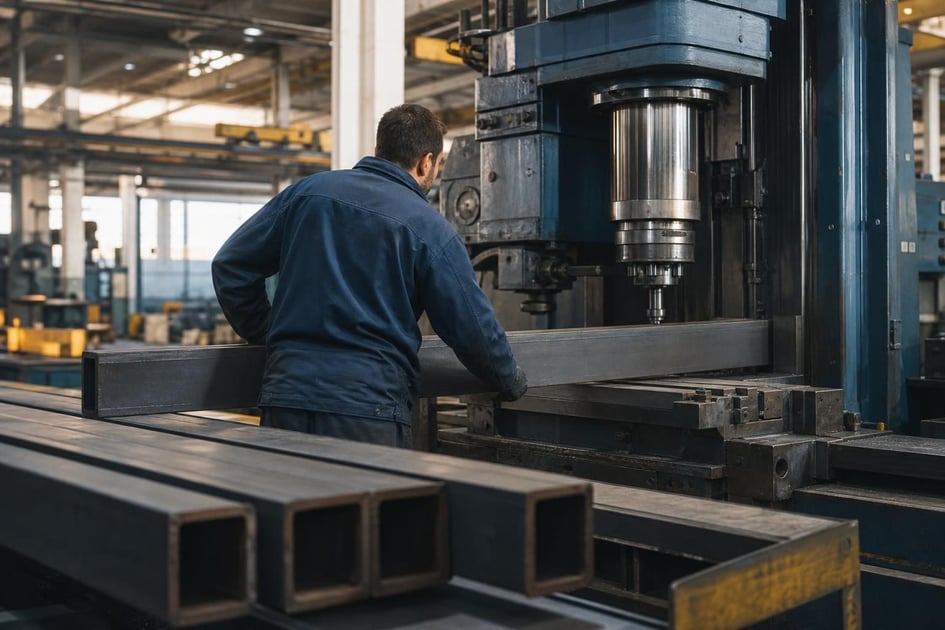
Manufacturing equipment financing covers a wide range of assets. Production machinery such as CNC mills, lathes, injection molding machines, press brakes, and laser cutters are the most common requests. But lenders also finance material handling equipment, inspection systems, tooling, and software that is permanently integrated with a machine.
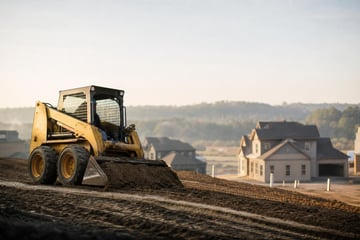
Support equipment matters just as much as primary production lines. A shop adding a new vertical machining center may also need a fork truck to load material, a coolant recycling system, and a coordinate measuring machine for quality control. All of these can be bundled into one financing agreement if they are purchased from the same vendor or quoted as a single project. If you are also looking at outdoor material handling, Skid Steers financing and Wheel Loaders financing are available for yards and rough-terrain applications.
Production Machinery
CNC machines, multi-axis mills, turning centers, EDM equipment, and additive manufacturing systems all qualify. The key requirement is that the equipment has a serial number, a verifiable resale market, and a useful life that exceeds the loan term. Custom-built or prototype machines are harder to finance because the collateral value is uncertain.
Material Handling and Support Equipment
Overhead cranes, conveyors, automated guided vehicles, palletizers, and packaging lines fall into this category. These assets often have longer useful lives than production equipment, which can stretch the available term. A 10-year-old crane may still qualify for a 36-month term if it has been maintained and the appraised value supports the advance.
Lease vs. Loan: Which Structure Fits Your Shop?
Manufacturers choose between an equipment finance agreement—essentially a loan—and a true lease. The difference is ownership. With a loan, you own the equipment and claim depreciation. With a true lease, the lessor owns the equipment and you claim the lease payments as an operating expense. The right choice depends on your tax position, how long you plan to keep the machine, and whether the technology is evolving rapidly. As Forbes guidance on equipment financing notes, using financing to acquire essential machinery allows companies to preserve working capital while expanding capacity.
| Factor | Equipment Loan | True Lease |
|---|---|---|
| Ownership | You own from day one | Lessor owns; you may have a purchase option |
| Down payment | Often $0 for qualified borrowers | Usually one or two payments upfront |
| Term | 24 to 72 months, matching useful life | 24 to 60 months, often shorter than useful life |
| Tax treatment | Depreciation and Section 179 for 2026 | Deduct lease payments as operating expense |
| End-of-term | $1 buyout or automatic ownership | Return, renew, or buy at fair market value |
| Best for | Equipment you will keep 7+ years | Technology that obsoletes quickly |
When a Loan Makes Sense
If you are buying a general-purpose machine tool that will still be cutting parts a decade from now, a loan preserves equity. You depreciate the asset, and in 2026 you may be able to elect Section 179 expensing or bonus depreciation depending on current IRS guidance. A loan also avoids the complexity of return conditions and residual-value negotiations at the end of the term.
When a Lease Makes Sense
If you need a high-end 3D printer or a robotic welding cell that may be obsolete in three years, a lease lets you upgrade without carrying residual risk. The payments are predictable, and you can structure a lease to match a specific contract or product lifecycle. The trade-off is that you do not build equity unless you exercise a purchase option, which is often set at fair market value.
Pro Tip: If you are comparing a $1 buyout lease to a loan, run the numbers on total payments plus the buyout. A $1 buyout lease is legally a lease for tax purposes, but economically it functions like a loan with a higher rate. Ask the lessor to disclose the implied rate so you can compare it directly against an equipment finance agreement.
New vs. Used Equipment Financing
Both new and used equipment can be financed with no money down, but the terms differ. New equipment carries full manufacturer warranty, predictable maintenance schedules, and the highest collateral value. Used equipment reduces your monthly payment and total interest cost because the purchase price is lower, but lenders scrutinize age, hours, and condition more closely.
New Equipment Pros and Cons
New machines qualify for the longest terms and the highest advance rates. A brand-new CNC turning center with a $250,000 invoice might qualify for a 60-month term with no down payment for a qualified borrower. The downside is depreciation: the machine loses 20% to 30% of its value in the first year, so you want to be sure you will use the capacity. Do not buy new simply because the financing is generous.
Used and Refurbished Equipment Pros and Cons
A three-year-old machining center at 60% of new cost can often be financed over 36 to 48 months with nothing down. The monthly payment drops significantly, and if the machine has low hours and a documented maintenance history, the reliability gap versus new is small. The risk is that older machines may need immediate tooling, software upgrades, or repairs that the lender will not fund. Build a 10% to 15% maintenance reserve into your cash-flow plan even if the lender does not require it.
How Equipment Age Affects Rates and Terms
Most lenders tier used equipment by age: 0 to 2 years, 3 to 5 years, 6 to 10 years, and over 10 years. Each tier shortens the maximum term and may add a quarter to a half point to the rate. Equipment over 10 years old is often restricted to 24-month terms and may require a larger equity cushion. Rates vary by credit profile, equipment age and term, so the exact adjustment depends on your overall file.
Tax Treatment for 2026
The tax rules for equipment purchases change with federal legislation, and 2026 is no exception. For the 2026 tax year, Section 179 allows businesses to elect to deduct the full purchase price of qualifying equipment in the year it is placed in service, subject to an annual limit set by Congress. Bonus depreciation may also be available at a percentage scheduled under current law. Because these limits and percentages are adjusted by legislation, you should confirm the 2026 figures with your CPA before making a purchase decision based on tax savings.
If you finance the equipment, you still own it for tax purposes under a loan. That means you can take Section 179 and depreciate the asset even though you did not pay cash upfront. Under a true lease, the lessor takes the depreciation and you deduct the lease payments. The difference can swing your 2026 tax outcome by thousands of dollars, so match the financing structure to your tax strategy.
By the Numbers: A manufacturer in the 24% federal tax bracket that finances a $200,000 machine and elects Section 179 for 2026 could see a federal tax reduction of roughly $48,000 in the first year, depending on the final 2026 limit and whether bonus depreciation applies. The same machine on a true lease would generate a deduction equal to the sum of annual lease payments, spread across the lease term. Talk to your CPA about which structure maximizes your 2026 deduction.
Qualification Criteria in Detail
Equipment lenders look at four things: time in business, credit history, revenue, and the equipment itself. No single factor disqualifies you, but weak spots in one area must be offset by strength in another. A borrower with a 650 credit score but ten years in business and strong cash flow can still qualify with no money down. A business with no revenue history will struggle even with excellent credit. According to SBA capital programs for manufacturers, access to equipment financing remains one of the most cited constraints for small manufacturers trying to expand.
Time in Business
Most equipment lenders prefer two or more years of operating history. That gives them bank statements, tax returns, and a track record of revenue. If you have been in business less than two years, you may still qualify, but the lender may ask for a shorter term, a personal guarantee, or additional collateral. Same-day approvals are possible for established shops with clean files.
Credit Profile
Personal credit scores above 680 open the best terms and the highest advance rates. Scores between 620 and 680 are workable but may trigger slightly shorter terms or additional documentation. Scores below 620 are not automatically declined, but the lender will dig deeper into cash flow, vendor references, and industry experience. Business credit matters too, especially if you have prior equipment loans or trade lines that report to Dun & Bradstreet or Experian Business.
Revenue and Bank-Statement Review
Lenders typically review the last three to six months of business bank statements. They look for consistent deposits, positive ending balances, and no excessive NSF fees. If your revenue is seasonal—common in agriculture, construction, and some manufacturing subsectors—be ready to explain the cycle. A lender who understands your peak quarters is more likely to approve a structure that matches your cash flow.
Equipment Age and Vendor Requirements
The lender will verify that the vendor is legitimate, that the equipment exists, and that the serial number matches the quote. For used equipment, an appraisal or inspection may be required. Private-party sales are harder to finance than dealer purchases because the lender has less recourse if the equipment description is inaccurate. Buying from a recognized dealer or auction house with a reputation for accurate condition reports speeds approval.
If your shop is ready to add capacity, see what you qualify for with a same-day decision on your equipment.
Find the right financing structure
Tell us about the equipment you need and we will show you the options that fit your business.
See Your OptionsWorked Cost Examples
These examples illustrate how no-money-down manufacturing equipment financing works in practice. They are not quotes; rates vary by credit profile, equipment age and term. Use them to understand payment magnitude and total cost structure.
Example 1: CNC Machining Center
A job shop finances a new vertical machining center with a $180,000 invoice. The lender funds 100% of the hard cost plus $15,000 in soft costs for rigging and installation, for a total advance of $195,000. On a 60-month term, the monthly payment might fall in the mid-$3,000 range. Over the life of the loan, the shop pays roughly $30,000 to $45,000 in total finance charges depending on the rate. The machine generates parts revenue from month one, and the payments are fixed, which makes budgeting predictable.
Example 2: Forklift Fleet Expansion
A metal fabricator adds two new 10,000-pound capacity forklifts at $65,000 each, plus a used overhead crane for $40,000. The total project cost is $170,000. Because the forklifts are new and the crane is five years old, the lender structures a blended term of 48 months. The monthly payment lands in the high-$3,000s. The fabricator keeps $170,000 in working capital and picks up a new contract that pays $50,000 per month. The equipment pays for itself within the first quarter.
Example 3: Full Production Line
A food packaging company replaces an entire line: filler, sealer, labeler, and conveyor system. The vendor quote is $485,000. The lender advances the full amount with no down payment on a 72-month term because the equipment is new and the borrower has eight years in business. The monthly payment is in the low-$8,000 range. Even at that size, the advance stays below the $5 million cap, and the collateral value of the line supports the loan without additional security.
Industry-Specific Use Cases
Manufacturing is not monolithic. A sheet-metal shop and a plastics injection molder have different equipment needs, seasonality, and margin profiles. Lenders who specialize in manufacturing understand these differences and structure accordingly. Census Bureau manufacturing data shows that small manufacturers operate across hundreds of subsectors, each with its own equipment lifecycle.
Metal Fabrication
Sheet-metal and structural-steel shops run press brakes, plasma cutters, and robotic welding cells. The equipment is heavy, durable, and holds value. That makes it ideal collateral. Many fabrication shops finance one major machine per year, stair-stepping capacity as backlog grows. Because the equipment is general-purpose, resale is strong even after 10 years, which encourages lenders to advance high percentages on used assets.
Food Processing and Packaging
Food manufacturing requires stainless-steel construction, washdown ratings, and compliance with FDA and USDA standards. This equipment costs more than standard industrial machinery but also retains value because the compliance features are mandatory for any buyer. Lenders who understand the sector will finance upfit costs and sanitation-related installation. The key is to work with a vendor who provides a detailed quote separating base machine from compliance features so the lender can fund both.
Plastics and Injection Molding
Injection molding presses range from $50,000 for small units to over $1 million for large-tonnage machines. Mold costs are separate and often exceed the press price. Some lenders will finance the press and the mold together if they are purchased simultaneously and the mold is tagged and identifiable. Others require the mold to be financed separately because it is a consumable tool with a finite number of cycles. Clarify this with your lender before you quote the project.
Pro Tip: If you are buying a machine that requires a long lead time—common with European CNC builders or custom packaging lines—ask your lender to issue a letter of intent or pre-approval before you place the deposit. Pre-approval locks your terms for 30 to 90 days and gives the vendor confidence that you can close, which may improve your negotiating position on price and delivery.
Common Mistakes Owners Make
Even experienced shop owners misstep when financing equipment. The most common errors are avoidable with a little preparation.
Buying Specs Instead of Output
A machine with faster spindle speed or higher tonnage is not automatically a better investment if your current bottleneck is material handling or programming time. Before you finance a $300,000 machine, map your current throughput constraint. If the real limit is operator availability, a less expensive machine with automation or a second shift may be the smarter use of capital.
Ignoring Soft Costs
Rigging, electrical, foundations, coolant, tooling, and training can add 15% to 25% to the invoice price. If your lender caps soft costs at 10% and you have not budgeted the difference, you will need to find cash at closing. Get a total project quote from your vendor, ask your lender what percentage of soft costs they will finance, and bridge any gap before you commit.
Stretching Term Length Too Far
A 72-month term on a machine with a five-year useful life means you are still paying for equipment that is no longer central to your operation. Match the term to the productive life of the asset. If you must stretch to afford the payment, the machine is too expensive for your current revenue. Either buy a smaller unit or wait until your backlog justifies the capacity.
What Documentation You Actually Need
The paperwork for a manufacturing equipment loan is lighter than an SBA 7(a) loan but heavier than a working-capital advance. Having these documents ready speeds approval and funding.
Application Paperwork
You will need a one-page application listing the business name, ownership structure, time in business, and requested amount. Most lenders also ask for a brief equipment description and the vendor name. If the business is structured as an LLC or corporation, be ready to provide articles of incorporation and an operating agreement.
Equipment Quotes and Invoices
A detailed vendor quote showing the machine model, serial number if available, price, and any trade-in allowance is required. For used equipment, photos, maintenance records, and an appraisal may be needed. The lender will not fund a vague estimate. Get a formal quote with terms and delivery timeline before you apply.
Financial Records
Expect to provide the last three to six months of business bank statements and the most recent two years of business tax returns. If your revenue is highly seasonal, a year-to-date profit-and-loss statement helps the lender understand the trend. Personal financial statements may be requested for closely held businesses, especially if the loan amount exceeds $250,000.
What Happens After Approval
Once the lender issues an approval, the process moves quickly. Most equipment loans fund within one to five business days after you accept the terms and return signed documents.
Funding Timeline
The lender verifies the vendor information, confirms insurance coverage, and issues a purchase order or wires funds directly to the vendor. If the equipment is in stock, you can take delivery within days. If it is a custom order with a 12-week lead time, the lender may hold the funds until the machine ships or pay the vendor in stages tied to milestones.
Title and UCC Filings
The lender files a UCC-1 financing statement in your state to perfect the security interest. This is standard and does not affect your ability to use the equipment. The filing shows up on your business credit report and is released when the loan is paid in full. Make sure the lender files against the business name exactly as it appears on the articles of incorporation to avoid title disputes later.
First Payment Timing
First payments are usually due 30 to 45 days after funding. Some lenders offer a 90-day deferred first payment for seasonal manufacturers, but interest accrues during the deferral. Ask whether the deferral is interest-free or if it is capitalized into the balance. A true 90-day skip is rare; most programs simply move the first payment to month four and extend the term.
When you are ready to move forward, get a same-day decision on your equipment and talk to a specialist about your specific machine.
Put the right equipment to work
From $5,000 to $5 million, new or used, Provide Capital helps businesses nationwide finance the equipment they need.
Apply TodayFrequently Asked Questions
Can I finance manufacturing equipment with no money down if my business is only one year old?
It is possible but more difficult. Most lenders prefer two or more years in business for no-money-down terms. If you have one year of strong revenue, a high credit score, and a co-signer or personal guarantee, some lenders will approve the deal. Expect a shorter term and slightly more documentation.
Does the equipment have to be new to qualify for 100% financing?
No. Used and certified-refurbished equipment can also be financed with no down payment. The age, hours, and condition will affect the term and rate. Equipment less than five years old is the easiest to finance at 100% advance; older equipment may require a shorter term.
Will the lender check my personal credit?
Yes, for most small and midsize manufacturing businesses. The owner’s personal credit is a key factor because the business itself may not have enough established credit history. Scores above 680 generally receive the best terms, but scores in the low 600s are often workable with compensating factors.
Can I include installation and freight in the loan amount?
Yes, up to a limit. Most lenders allow soft costs such as delivery, installation, and training to be included up to 10% to 15% of the equipment cost. If your project requires extensive electrical or foundation work, you may need to cover the excess out of pocket or finance it separately.
What happens if I want to pay off the loan early?
It depends on the loan agreement. Some equipment loans have a prepayment penalty for the first 12 to 24 months, after which you can pay off the balance with no fee. Others use a declining balance penalty or no penalty at all. Ask for the prepayment language before you sign so you are not surprised if you refinance or sell the business.
Can I finance equipment from a private seller?
Yes, but it is more complex. The lender will verify the seller’s ownership, inspect the equipment, and may require an independent appraisal. Dealer purchases are faster because the lender already knows the vendor and can verify the equipment description quickly. If you buy privately, build in an extra week for due diligence.
Is a personal guarantee required?
For loans under $150,000, some lenders will waive the personal guarantee for established businesses with strong cash flow. Above that threshold, a personal guarantee is standard. It means you are personally liable if the business defaults, but it also helps you qualify for better terms and a higher advance rate.
How fast can I get funded?
Same-day approvals are possible for straightforward deals with clean credit and clear equipment quotes. Funding usually follows within one to five business days. Complex deals, used private-party purchases, or amounts approaching $1 million may take one to two weeks while the lender completes verification and valuation.
Next Step
Adding capacity without draining your cash reserve is one of the most leveraged moves a manufacturer can make. The equipment earns revenue while the payments are fixed, and the collateral structure keeps your other assets unencumbered. Whether you are buying your first CNC machine or adding a fourth production line, the key is to match the financing structure to your tax strategy, your cash-flow cycle, and the useful life of the asset.
Start by gathering your last three months of bank statements, your most recent tax return, and a vendor quote. Then talk to a specialist about your specific machine and see what terms are available for your shop. For a broader look at how manufacturers use financing to grow, explore our guide to Manufacturing equipment financing.
Disclaimer: The information provided in this article is for general educational purposes only and is not financial, legal, or tax advice. Funding terms, qualifications, and product availability may vary and are subject to change without notice. Provide Capital does not guarantee approval, rates, or specific outcomes. For personalized information about your business funding options, contact our team directly.