What Private Label Financing Actually Means for Your Dealership
Private label financing lets you offer competitive equipment financing to your buyers under your dealership’s brand, backed by a lender that handles underwriting and funding. Your customer sees your logo on the paperwork, not a third-party bank they have never heard of. You close the sale faster, protect your margins, and turn price-shoppers into monthly-payment buyers. As Forbes has reported, dealers who integrate financing at the point of sale consistently outperform competitors who rely on cash deals alone.
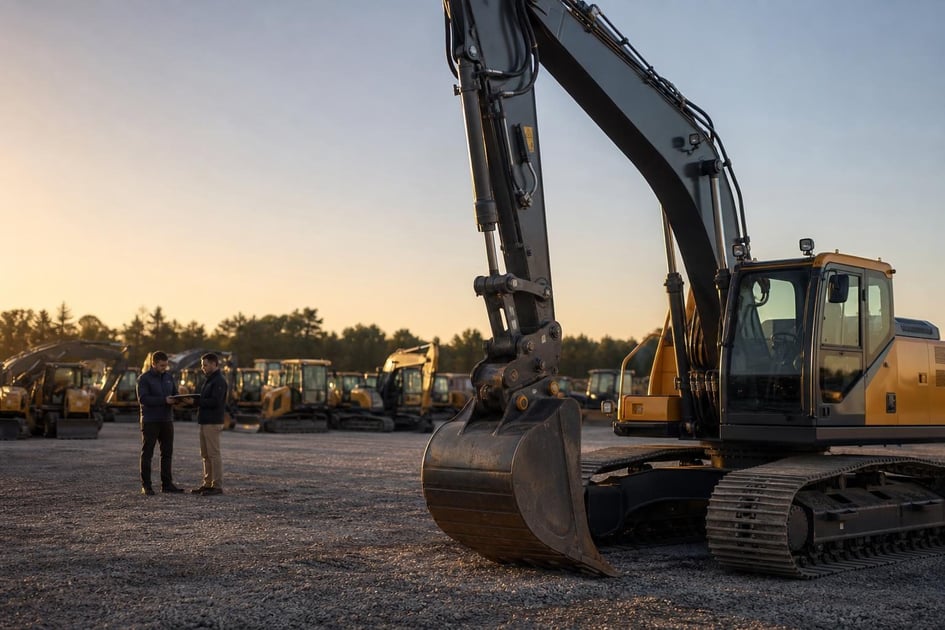
The program is not a dealer floor-plan or a line of credit for your inventory. It is a sales tool. When a buyer wants a $75,000 skid steer or a $180,000 dump truck, you hand them a one-page application, submit it through the portal, and let the lender handle the rest. The equipment itself is the collateral, which keeps rates competitive compared to unsecured borrowing.
How the Program Works from First Quote to Funded Deal
The process is built around speed and simplicity. When a buyer is interested in a machine, you submit an application through the program—often while the customer is still on your lot. Decisions can come back the same day depending on the file strength and equipment type, though timing varies by transaction. Once approved, the lender pays your dealership directly, usually within one to three business days, and the customer makes payments to the servicer.
Most programs include a dealer portal or mobile-friendly submission tool. You enter the customer’s basic information, the equipment details, and the desired term. The system may run a soft credit pull initially, which does not affect the buyer’s score, and return a preliminary offer within minutes. Final approval still requires full underwriting, but the speed lets you hold the buyer’s attention while they are emotionally invested in the machine.
Because the equipment itself is the collateral, the lender does not need to file blanket liens on the business or take real estate security. That means less paperwork for the buyer and fewer obstacles that send them shopping elsewhere. You keep control of the customer relationship from the handshake to the delivery.
Key Insight: Because the lender uses the equipment as collateral rather than filing blanket liens on the business, your buyer’s banking relationship stays clean. That matters for owner-operators who need continued access to working capital lines for payroll and fuel.
What Equipment and Buyers Qualify
The program finances new and used business equipment from $5,000 up to $5 million. That range covers everything from a single commercial oven to a full fleet of dump trucks. Eligible industries include construction, healthcare, dental, restaurant and food service, manufacturing, transportation, agriculture, HVAC, and forestry.
Credit decisions weigh the overall profile rather than a single score. Lenders look at time in business, cash flow, bank activity, and the equity in the equipment being purchased. Rates vary by credit profile, equipment age and term. The collateral-based approach also means that a buyer with a 680 credit score but strong cash flow can often finance a $120,000 piece on competitive terms, whereas an unsecured lender might decline the same file. The key is the relationship between the equipment value and the amount financed.
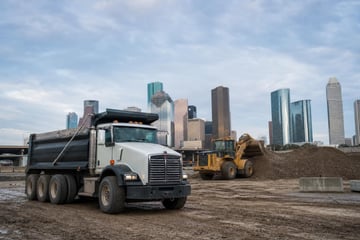
A construction contractor buying a late-model Dump Trucks financing unit will see different terms than an established logger financing a used chipper through Forestry Logging equipment financing.
New vs. Used Equipment Considerations
New equipment typically commands longer terms and stronger advance rates because the collateral value is predictable. Used equipment is absolutely financeable, but term lengths may shorten on high-hour or older units. For the lender, the liquidation value of a three-year-old Skid Steers financing unit with 1,200 hours is easier to underwrite than a 20-year-old specialty machine with limited resale data. If you stock both, make sure your used inventory has clear serial numbers, maintenance records, and third-party valuation when available.
Lease vs. Loan: Structuring the Deal at the Point of Sale
Not every buyer wants to own the equipment outright on day one. Offering both lease and loan options lets you match the structure to their tax strategy and cash-flow needs. The table below breaks down the differences.
| Feature | Equipment Loan | $1 Buyout Lease | FMV Lease |
|---|---|---|---|
| Ownership at end | Borrower owns | Lessee owns after final $1 payment | Lessee can purchase at fair market value, return, or renew |
| Monthly payment | Usually lower total cost of ownership | Similar to loan, slightly higher | Lowest monthly payment |
| Tax treatment (2026) | Interest deductible; depreciation and Section 179 may apply | Lease payments generally deductible; consult a CPA | Lease payments generally deductible; consult a CPA |
| Collateral | Equipment secures the loan | Lessor holds title | Lessor holds title |
| Best for | Buyers wanting equity and long-term ownership | Buyers who want ownership with predictable transfer | Buyers wanting lowest payment or short upgrade cycles |
A loan puts ownership in the buyer’s name immediately and lets them claim depreciation. A $1 buyout lease operates almost identically for tax purposes but keeps title with the lessor until the final payment. An FMV lease offers the lowest monthly payment and works well for buyers who plan to upgrade every three to five years.
Pro Tip: Lead with the monthly payment on a 60-month term before you mention the cash price. A $2,400 monthly payment on a $115,000 machine feels smaller than the sticker price, and it shifts the conversation from "Can I afford this?" to "Does this fit my monthly budget?"
Rates, Terms, and Down Payment Expectations
No two deals are identical. Rates vary by credit profile, equipment age and term. A buyer with strong credit, ten years in business, and a low loan-to-value on a new machine will qualify for the most aggressive structure. A newer business or a higher-risk collateral piece may require a larger down payment or a shorter amortization.
The equipment itself is the collateral. That means the lender does not need to encumber real estate or other assets to secure the deal, which simplifies documentation and keeps the transaction moving. Terms generally stretch from 24 to 84 months depending on the useful life of the asset.
Down payments typically range from zero to 20 percent depending on the credit tier and the age of the asset. A new machine for a well-qualified buyer may require no money down, while a used unit for a borderline credit may need 10 to 15 percent equity to secure the deal. The lender bases this on liquidation data and the expected residual at the end of the term.
By the Numbers: Deals in the $50,000 to $250,000 range represent the most common transaction size for mid-size dealers. On these files, same-day credit decisions are possible when the buyer provides complete documentation—bank statements, a signed equipment quote, and proof of business entity—by mid-morning.
Tax Implications for the 2026 Tax Year
Equipment financing carries real tax advantages, but the details change year to year. For the 2026 tax year, businesses may be eligible to expense qualifying equipment under Section 179, subject to annual limits and phase-out thresholds. Additionally, bonus depreciation rules may allow accelerated first-year deductions on new and used qualified assets, though the exact percentage for 2026 depends on current IRS guidance and any legislative adjustments.
Because tax law shifts and every business has a unique filing position, your buyers should always consult a CPA before making a purchase decision based on tax savings. Do not let a customer assume they can write off the full purchase price without confirming their specific eligibility.
Industry-Specific Scenarios Where Private Label Financing Wins
The best dealer finance programs adapt to the seasonal and collateral realities of each sector. According to U.S. Census Bureau data, equipment-intensive sectors like construction and agriculture dominate rural and exurban economies, and those buyers expect payment options at the point of sale.
Construction and Earthmoving
Contractors often buy in the first quarter ahead of the spring build season. A private label program lets you quote Dump Trucks financing and Skid Steers financing with a payment option before the customer walks to a competitor. Because the equipment is the collateral, even buyers with moderate credit can qualify if the advance rate is conservative.
Forestry and Logging
Logging crews run expensive iron with long lead times. Offering Forestry Logging equipment financing at the point of sale lets you move skidders, feller bunchers, and chipper trucks without waiting for the buyer to arrange outside capital. The lender understands collateral values in this niche, which means fewer appraisal delays.
HVAC and Mechanical Contractors
Commercial HVAC replacements and new-build installs require rooftop units, chillers, and duct fabrication tools. A mechanical contractor bidding a job needs the equipment on the truck quickly. Financing through the dealer keeps the project timeline intact and preserves the contractor’s bonding capacity.
Agriculture and Food Processing
Farmers and processors face seasonal cash flows. Harvest equipment and food-service machinery often need to be in place before revenue arrives. Structuring payments to align with the production cycle—larger payments in-season, smaller in winter—can be built into some private label structures.
Key Insight: Dealers who embed financing into their sales process—mentioning a monthly option on every quote—see higher average transaction sizes than those who treat it as a rescue tool for cash-short buyers. The financing conversation should start at hello, not at the close.
Common Mistakes Dealers Make With In-House Financing
Offering private label financing is only effective if your sales team uses it correctly. Avoid these pitfalls:
- Waiting until the customer says "I can't afford it." By then, the buyer is already in a defensive posture.
- Quoting only the cash price. Cash buyers are rare in the $50,000-plus equipment market; most businesses finance.
- Overpromising on rate. Never quote a specific APR before an application is reviewed. Rates vary by credit profile, equipment age and term.
- Neglecting to explain the 2026 tax implications accurately. Point buyers to a CPA rather than playing tax advisor.
- Failing to follow up on declined applications. A larger down payment or a co-signer can often turn a decline into an approval.
Documentation Your Buyer Needs to Close Fast
Speed depends on preparation. While light-doc programs exist for strong credits, the cleanest files include:
- One-page credit application
- Equipment invoice or quote from your dealership
- Three most recent business bank statements
- Proof of business entity, such as articles of incorporation or operating agreement
- Driver's license or government-issued ID for guarantors
For smaller transactions under $50,000, some buyers qualify with just the application and a bank statement. At the higher end, the lender may require two years of tax returns, an interim financial statement, and a site inspection. The key is to disclose the full picture upfront. Surprises discovered late in the process—such as undisclosed tax liens or recent bankruptcies—are the most common reason for same-day approvals to stall.
For transactions approaching the upper end of the $5 million range, expect to provide full financials, tax returns, and a detailed equipment appraisal. The sooner your buyer gathers these items, the sooner the lender can issue a decision.
What Happens After Approval
Once the lender issues approval, the closing package moves to the customer for signature. After executed documents are returned and the dealer provides proof of delivery or bill of sale, funds are wired directly to your dealership. The buyer’s first payment is typically due 30 to 45 days later depending on the funding date and structure.
Some lenders require proof of insurance listing them as loss payee before releasing funds. Make sure your buyer has an active policy with adequate coverage for the replacement value of the machine. If the equipment is being delivered to a job site rather than your lot, the funding may also hinge on verified delivery and a signed acceptance certificate.
From that point forward, the servicer handles billing, payment processing, and any customer service questions about the account. Your team stays focused on selling the next machine, not collecting invoices. As the SBA notes, access to capital remains a top constraint for small equipment buyers, and removing that friction at the point of sale is one of the fastest ways to grow revenue.
If you want to stop losing sales to outside banks, talk to a specialist about launching private label financing on your lot.
Frequently Asked Questions
Is private label financing the same as a bank loan?
No. A traditional bank loan usually requires the borrower to apply independently and may involve blanket liens on the business or real estate collateral. Private label financing is arranged at the point of sale, uses only the equipment as collateral, and is branded with your dealership name.
Do I need to handle collections or servicing?
No. The lender services the loan or lease. Your dealership receives the sale proceeds and moves on to the next customer.
What credit score does my customer need?
There is no published minimum score. Underwriters look at the full picture: time in business, cash flow, bank activity, and the value of the equipment relative to the loan amount. Stronger files get better terms; weaker files may require more equity or a shorter term.
Can used equipment be financed?
Yes. Both new and used equipment qualify. The age, hours, and condition of the unit will influence the term length and advance rate.
How fast can my customer get approved?
Same-day approvals are possible on complete applications, especially for transactions under $250,000. Larger or more complex files may take 24 to 48 hours.
Who owns the equipment during the term?
On a loan, the buyer owns the equipment and the lender holds a lien. On a lease, the lender or lessor holds title until the end-of-term option is exercised.
Is there a prepayment penalty?
It depends on the structure. Many equipment loans allow early payoff without penalty, while leases are generally non-cancelable agreements. Review the specific term sheet with your buyer before closing.
Can I offer this to customers in any state?
Yes. Provide Capital serves businesses nationwide, including construction, healthcare, dental, restaurant and food service, manufacturing, transportation, agriculture, HVAC, and forestry operations.
Get a same-day decision on your dealership's program application and start quoting payments this week.
Disclaimer: The information provided in this article is for general educational purposes only and is not financial, legal, or tax advice. Funding terms, qualifications, and product availability may vary and are subject to change without notice. Provide Capital does not guarantee approval, rates, or specific outcomes. For personalized information about your business funding options, contact our team directly.