Yes, you can finance restaurant and food service equipment with a subprime credit profile. Because the equipment serves as collateral, lenders can extend capital even when a personal credit score sits well below 650. Rates vary by credit profile, equipment age and term, but the structure keeps monthly payments competitive enough to preserve cash flow for payroll and inventory.
Why Equipment Collateral Opens the Door
Traditional unsecured loans rely almost entirely on credit history and personal guarantees. With Food Service Equipment financing, the oven, walk-in cooler, or prep table you are buying acts as the security. Lenders weight the equipment value, its resale market, and your business revenue more heavily than a raw credit score. If the deal makes economic sense—meaning the monthly payment is reasonable against the revenue the equipment generates—approval is possible even with past delinquencies or a recent bankruptcy.
Collateral also keeps rates lower than unsecured alternatives. Because the lender can recover the asset, the risk profile drops. That does not mean everyone qualifies. It means a business generating steady daily card revenue has a viable path even if the owner’s personal score is in the mid-500s. The key is demonstrating that the new equipment will produce enough gross profit to cover its own payment.
What Bad Credit Looks Like on an Application
In equipment finance, bad credit usually means a FICO score under 600 to 640, or a recent history of charge-offs, tax liens, or judgments. It does not mean automatic disqualification. Lenders offering Restaurant Food Service equipment financing to lower-credit borrowers also examine recent business bank statements, time in business, the equipment’s make and model, your down payment or trade-in equity, and any existing merchant cash advances or liens.
If you are a startup with no revenue, expect to put more money down and show significant industry experience. If you have multiple years of tax returns showing steady sales, your negotiating position improves even with a low score. A borrower with a score in the 580 range and strong monthly revenue often receives a better offer than a borrower with a score in the 620 range but minimal sales.
Equipment You Can Finance
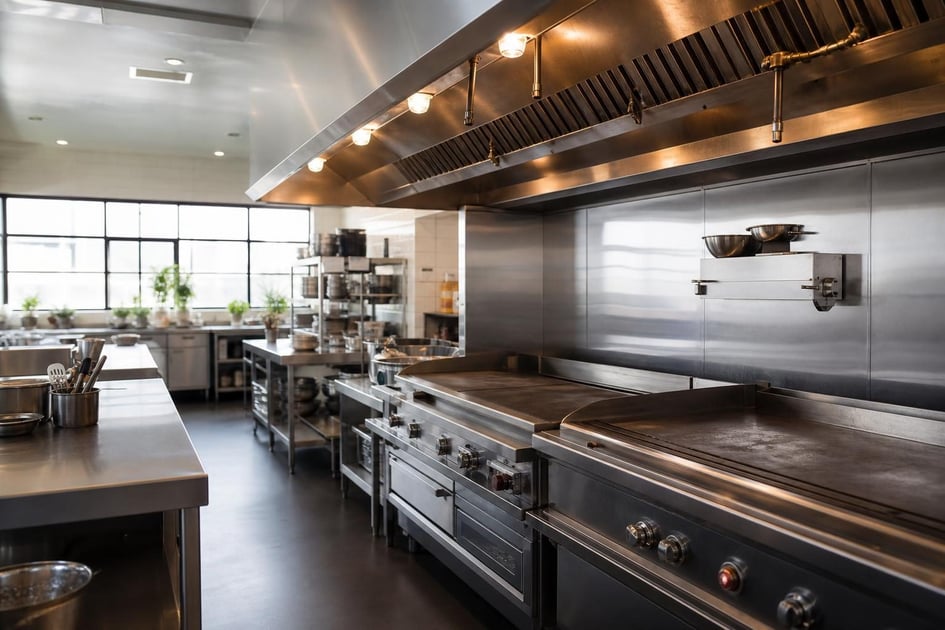
We finance new and used business equipment from $5,000 to $5 million. In the kitchen, that includes convection ovens, gas ranges, griddles, fryers, dish machines, ice makers, reach-in refrigerators, freezers, prep tables, exhaust hoods, and POS systems. For front-of-house, it covers espresso machines, beverage dispensers, and Self Service Kiosk financing.
Used equipment is eligible if it has a verifiable serial number and a remaining useful life. A 10-year-old convection oven may still qualify if it is from a reputable brand and has been inspected. Because the equipment itself is the collateral, the lender cares about resale value and condition. A $12,000 used freezer carries different risk than a $75,000 new cook line, so the down payment and rate will adjust accordingly.
How Rates and Payments Are Calculated
Rates vary by credit profile, equipment age and term. A borrower with a 700 score buying a new oven on a shorter term will see a lower rate than a borrower with a score in the 590 range financing a 5-year-old fryer over a longer term. There is no universal APR grid published for subprime equipment finance because every deal is priced to the specific risk.
Monthly payments are usually structured to match the revenue the equipment produces. A busy QSR might handle a $450 monthly payment on a new griddle more easily than a catering company with seasonal swings. Underwriters look at your average daily deposits to confirm the payment is sustainable.
Financing Structures for Challenged Credit
Not every deal is a simple term loan. Depending on your credit tier and the equipment age, you may see:
- Equipment Finance Agreement (EFA): You own the equipment from day one and pay it off over a fixed term. The equipment secures the loan.
- $1 Buyout Lease: Technically a lease, but you own the equipment after the final $1 payment. Often easier to approve for lower credit because the lessor retains title until payoff.
- Fair Market Value (FMV) Lease: You return the equipment at the end of the term. This is harder to obtain with challenged credit and works best for equipment you plan to upgrade quickly.
Most subprime restaurant borrowers end up in an EFA or a finance lease because the lender wants the security of hard collateral and a clear path to ownership.
Lease vs. Finance Agreement at a Glance
Choosing between a lease and an EFA affects ownership, monthly cost, and tax treatment. The table below summarizes the practical differences for an owner-operator with a subprime credit profile.
| Feature | Equipment Finance Agreement | $1 Buyout / Finance Lease |
|---|---|---|
| Ownership | You own the equipment from day one. | You own the equipment after the final payment. |
| Collateral | The equipment secures the loan. | The equipment secures the lease. |
| Typical term | Terms usually run two to five years. | Terms usually run two to five years. |
| Down payment | Down payments often run 10% to 20% for lower credit. | The lessor often requires one or two payments upfront. |
| Credit flexibility | Moderate | Often more lenient |
| Tax treatment | You may take depreciation and interest deductions; ask your CPA. | You may deduct lease payments; ask your CPA. |
If preserving capital is your top priority and you plan to keep the equipment long-term, an EFA usually makes sense. If your credit is severely challenged, a finance lease may be the path of least resistance.
The 2026 Tax Picture
For tax year 2026, Section 179 may allow you to deduct the full purchase price of qualifying equipment in the first year, subject to annual limits and phase-outs that adjust for inflation. Bonus depreciation may also be available for 2026 at a reduced federal rate, though the exact percentage depends on current legislation. Because these figures change yearly and interact with your overall tax position, speak with a CPA before you structure the deal. Never let the tax tail wag the cash-flow dog.
From Application to Approval
Same-day approvals are possible when you have clean paperwork: a signed equipment quote, recent business bank statements, and a voided business check. Underwriters verify that the business is active, the revenue covers the new payment, and the equipment value matches the loan amount.
Approval is never guaranteed. If your revenue is seasonal, be ready to explain the cycle. If your credit report shows a recent foreclosure, write a short narrative about what happened and why the risk no longer exists. Lenders read these notes. The more transparent you are about past problems, the faster the underwriter can price the deal.
Mobile Concepts and Delivery Vehicles
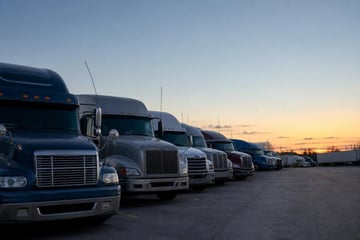
Not every food service operation is a brick-and-mortar dining room. We also work with mobile kitchens. Food Truck financing covers the vehicle, generator, wrap, and cooking line, all under one agreement. The collateral includes the truck itself, which broadens the pool of lenders willing to look at lower credit. Catering vans and delivery vehicles are also eligible.
Mobile operators often face higher scrutiny on credit because the vehicle depreciates differently than a static oven. However, a food truck generating $1,200 a day in sales can support its own payment even if the owner’s credit is bruised. Bring your daily sales reports and social media booking calendar to strengthen the file.
Frequently Asked Questions
Can I get restaurant equipment financing with a 500 credit score?
It is difficult but not impossible. A score near 500 usually requires a larger down payment, strong monthly revenue, or a co-signer. The equipment collateral helps, but lenders still need evidence you can cover the payments.
Will applying hurt my credit?
Most equipment lenders perform a hard inquiry, which can temporarily lower your score a few points. However, some offer pre-qualification using soft pulls. Ask before you submit.
How much down payment do I need?
Expect 10% to 20% if your credit is below 640. Startups or borrowers under 600 may need more. The exact amount depends on the equipment type, its age, and your business bank statements.
Can I finance used equipment?
Yes. Used equipment is common in restaurant openings and often easier to approve because the lower loan amount reduces lender exposure. The equipment must have a clear title and remaining useful life.
What documents do I need?
Have your driver’s license, business license, recent months of business bank statements, a vendor quote, and a voided business check. If you are buying real estate alongside the equipment, that requires a separate process.
Is there a penalty for early payoff?
Some EFAs and leases include prepayment penalties or require you to pay all remaining interest. Others allow early payoff with a discount. Review the contract before signing.
Your Next Step
Gather your equipment quote and your recent business bank statements. Call a lender that understands restaurant cash flow and ask for a quote based on your real numbers, not just your credit score. If the payment fits your kitchen’s daily revenue, you are closer to a closing than you think.
Disclaimer: The information provided in this article is for general educational purposes only and is not financial, legal, or tax advice. Funding terms, qualifications, and product availability may vary and are subject to change without notice. Provide Capital does not guarantee approval, rates, or specific outcomes. For personalized information about your business funding options, contact our team directly.