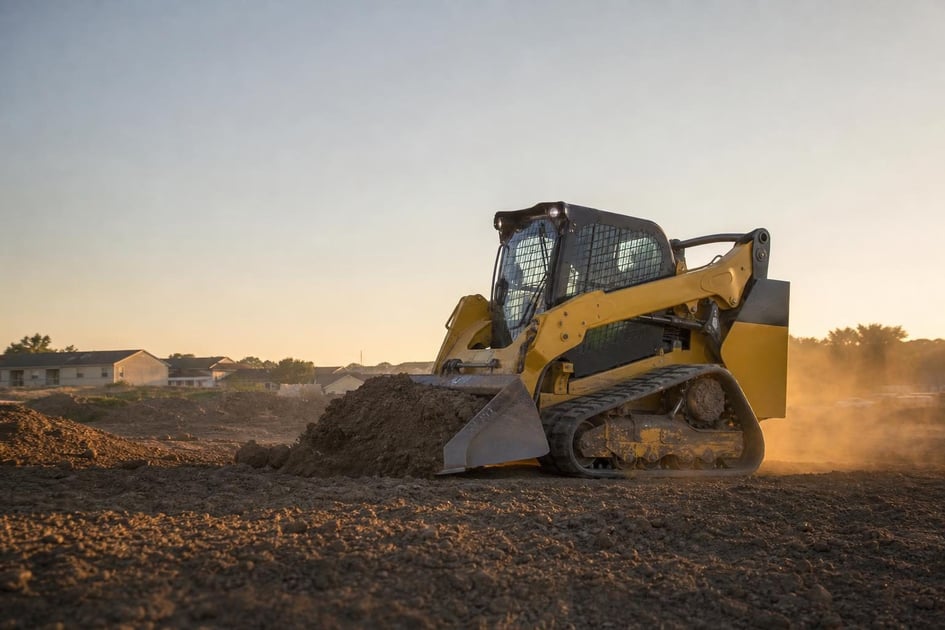
Yes, you can finance a skid steer with no down payment. Lenders who specialize in equipment financing use the machine itself as collateral, which means qualified buyers can cover the full cost of the loader—plus attachments and delivery in many cases—without draining operating cash. Rates vary by credit profile, equipment age and term length, and same-day approvals are possible if your documentation is in order. What matters most is understanding how the structure affects your monthly obligation, what the lender reviews during underwriting, and how to avoid common mistakes that delay funding.
How No-Down-Payment Skid Steer Financing Works
Equipment financing is a secured transaction. The lender purchases the skid steer on your behalf or places a lien on the title, and you repay the balance over a fixed term. Because the collateral is a liquid, name-brand asset with a strong resale market—think Bobcat, Caterpillar, John Deere, or Kubota—the lender's risk is lower than with an unsecured working-capital loan. That security is what makes 100% financing available to borrowers who might otherwise be asked for 10% to 20% down. As Forbes guidance on equipment financing notes, using the asset itself as collateral preserves working capital for other growth initiatives.
Why the Equipment Itself Replaces Cash Equity
In a typical unsecured business loan, the lender has no asset to reclaim if you default. The lender therefore demands cash equity, a personal guarantee, or both. In Skid Steers financing, the machine is the equity. The lender files a UCC-1 financing statement against the serial number and retains a purchase-money security interest. If the note goes unpaid, the lender repossesses and resells the loader. Because a well-maintained skid steer with under 2,000 hours retains 60% to 75% of its value in the first three years, the lender's loss-given-default is manageable. That collateral value is what opens the door to zero-down structures.
What 100% Financing Actually Covers
"No down payment" can mean different things depending on the lender. Some finance only the invoice price of the base machine. Others will bundle soft costs—buckets, grapples, pallet forks, delivery fees, and even a one-year warranty—into the note, provided the total advance does not exceed the lender's loan-to-value threshold for that collateral class. At Provide Capital, financing spans $5,000 to $5 million, so a single skid steer and its attachments almost always falls well within the range. You should clarify up front whether the quote covers only the chassis or the full ready-to-work package. If you pay cash for a $2,800 bucket and $900 freight after the fact, you have effectively made a down payment in disguise. The SBA 7(a) loan program can also finance equipment, but direct equipment financing typically moves faster because the collateral is self-securing.
Key Insight: A no-down-payment structure does not mean the lender ignores equity. The financed amount is typically 100% of the equipment's invoice or appraised value, but the lender secures its position by filing a UCC-1 lien on the skid steer itself. If the machine retains strong resale value—most name-brand loaders with under 2,000 hours do—you can often finance the full cost plus soft costs like delivery and a bucket package without touching operating cash.
Already have a machine in mind?
Provide Capital finances new and used equipment from $5,000 to $5 million, with same-day decisions possible.
Apply NowWhat It Takes to Qualify
Zero-down financing is not automatic. Lenders weigh three factors: your credit history, your business's time in operation and revenue stability, and the age or condition of the machine you are buying. A strong profile in any two categories can sometimes offset a weakness in the third, but understanding where you stand before you apply will save you from surprises.
Credit Expectations
Most equipment lenders look for a FICO score in the mid-600s or higher for no-down-payment approvals. If your score sits below 620, you may still qualify, but the lender may require a nominal down payment or a shorter term to limit exposure. Bankruptcies, tax liens, and recent judgments are red flags, although a discharged Chapter 7 older than three years with clean credit since is often workable. The lender also reviews your business credit if you have established trade lines. A strong Paydex score or positive vendor references can help offset a thin personal file.
Time in Business and Revenue
Two years in business is the standard threshold for the most competitive terms. Startups are not the focus here—this product is designed for established owner-operators who need to add or replace a machine. Lenders usually ask for three to six months of business bank statements to verify cash flow. They are looking for consistent deposits, not necessarily massive revenue. A landscaping company clearing $25,000 a month in season with steady offseason retainers can look stronger than a general contractor pulling $80,000 a month in lumpy project payments. If your statements show regular inflows and a positive ending balance, you are on solid ground.
The Machine's Role in Underwriting
The lender underwrites the collateral as carefully as the borrower. A new 2026 model from an authorized dealer with a full warranty is the lowest-risk scenario. A 2018 machine with 3,500 hours bought at a rural auction is higher risk. The lender may require an independent appraisal or a condition report for used equipment older than five years. Private-party sales add another layer of verification because the lender must confirm clear title and ensure no prior liens exist. If you are buying used, gather the maintenance records and hour-meter readings before you apply. The more documentation you have, the faster the lender can clear the collateral.
By the Numbers: A $45,000 used skid steer on a 48-month term with no money down might carry a monthly payment in the mid-to-high three figures, while a $75,000 new loader on a 60-month term can run into the low-to-mid four figures. Rates vary by credit profile, equipment age and term length, so the difference between a 700-credit applicant and a 600-credit applicant on the same machine can shift the payment by 15% to 30%.
If your credit and cash flow are in order, talk to a specialist about your specific machine to lock in terms before rates shift.
New vs. Used: How the Decision Changes Your Terms
Whether you buy new or used determines your interest-rate range, your term options, and the speed of approval. Neither choice is universally better; the right answer depends on your utilization rate, maintenance capability, and tax strategy for the 2026 tax year.
Financing a New Skid Steer Loader
New machines carry the lowest rates because the collateral value is predictable. Dealer invoice pricing is transparent, warranties reduce the risk of unexpected repair costs, and the lender knows exactly what the resale market looks like. Terms of 48 to 72 months are common for new loaders. A Skid Steer Loader financing package on a new machine may also include seasonal skip-payment structures for contractors who earn most of their revenue in warmer months. The trade-off is depreciation. A new loader can lose 15% to 25% of its value in the first 12 months, so if you plan to trade or sell within two years, you may be underwater on the note.
Financing a Used Skid Steer Loader
Used equipment is where zero-down financing shines for cost-conscious buyers. A two- to four-year-old machine with 1,000 to 2,000 hours often sells for 30% to 50% less than new but still has half its useful life remaining. Lenders will finance these units, though they typically cap terms at 36 to 60 months depending on age. The key is source. A dealer-certified used machine with a limited warranty is easier to finance than an as-is auction unit. If you buy from a private seller, expect the lender to verify the serial number, check for theft, and confirm that the hour meter has not been rolled back. Request a pre-purchase inspection from a certified mechanic; the $400 to $600 fee is modest insurance against financing a machine with a cracked boom or a failing hydrostatic drive.
Lease vs. Loan: A Side-by-Side Comparison
Zero-down structures exist for both loans and leases, but the accounting, tax treatment, and end-of-term options differ sharply. A loan builds equity; a lease preserves flexibility. The table below breaks out the practical differences.
| Feature | Equipment Loan | Equipment Lease |
|---|---|---|
| Down payment | Often $0 with strong credit | Typically $0 to one payment in advance |
| Ownership | You own the skid steer after the final payment | You return or buy out at end of term |
| Monthly payment | Higher than a lease because you are paying off full value | Lower because you pay for use, not full depreciation |
| Tax treatment | Interest deductible; depreciation or Section 179 applies | Lease payments generally fully deductible as operating expense |
| Term flexibility | 24 to 72 months common | 12 to 60 months common |
| End of term | Free and clear title | $1 buyout, FMV buyout, or return |
| Collateral | Skid steer secures the note | Lessor retains title; no UCC lien on your balance sheet |
| Best for | High-utilization owners who plan to keep the machine 5+ years | Operators who want to upgrade frequently or preserve credit lines |
The right structure depends on your effective tax rate and your expected holding period. If you run a Construction equipment financing operation and put 800 hours a year on a loader, a loan usually wins because the machine pays for itself long before it wears out. If you are a specialty contractor who needs a track loader for a single 18-month pipeline project, a lease with a return provision may be smarter.
Pro Tip: Request that your financing covers soft costs—transport, attachments, and warranties—up front. Many owner-operators finance only the base machine and then pay cash for a $3,500 bucket and $1,200 delivery, which defeats the purpose of preserving capital. A comprehensive equipment finance agreement can bundle those costs into the note, provided the total does not exceed the lender's advance rate for the collateral class.
Find the right financing structure
Tell us about the equipment you need and we will show you the options that fit your business.
See Your OptionsTax Treatment for the 2026 Tax Year
For the 2026 tax year, the Internal Revenue Code offers several paths to deduct equipment costs. Section 179 allows businesses to expense qualifying equipment in the year it is placed in service, subject to annual limits that adjust for inflation. Bonus depreciation may also apply, though the percentage and eligibility rules shift with federal legislation. Because these figures change annually and interact with your overall tax posture, you should confirm the exact 2026 limits with your CPA before you structure a purchase. Do not rely on a 2025 or earlier article for the current ceiling.
If you choose a loan, you can generally deduct the interest portion of each payment and take depreciation or Section 179 on the equipment itself. If you choose a true tax lease, the lease payments are typically fully deductible as an operating expense. The difference can be material. A borrower in a high marginal bracket may prefer accelerated depreciation, while a business with net operating losses may favor the steady deduction of lease payments. Your CPA can model the two scenarios against your 2026 projected income.
One caution: if you finance a skid steer in December 2026 but do not put it into service until January 2027, the deduction shifts to the 2027 tax year. Delivery date and first use matter for IRS purposes. Keep the bill of lading and any commissioning records with your tax files.
Industry-Specific Use Cases
Skid steers are not limited to dirt contractors. Their compact footprint and attachment ecosystem make them valuable across several industries that Provide Capital serves nationwide. Understanding how peers in your sector use financing can clarify whether a zero-down structure fits your workflow.
In construction and landscaping, a skid steer is often the first machine on site and the last to leave. Contractors use them for grading, trench backfill, palletized material handling, and snow removal in the offseason. Because utilization is high, a loan with a 60-month term makes sense; the machine generates revenue every month. In agriculture, a skid steer handles feed, manure, and fence-line clearing. Farmers with seasonal income may prefer a 48-month term with quarterly or semi-annual payment schedules that align with harvest cash flow. Forestry and logging crews use high-flow skid steers with mulching heads for right-of-way clearing. These specialized attachments can cost as much as the base machine, so bundling the attachment into the same Dump Trucks financing-style equipment note preserves liquidity for fuel and crew payroll.
Even manufacturing and warehousing operations use skid steers for yard management and loading. U.S. Census Bureau economic data consistently ties equipment demand to construction and manufacturing activity, which supports steady resale values for skid steers. A plant manager who needs a loader for a new expansion can preserve the company's line of credit for inventory by using equipment-specific financing instead. The key is matching the term to the useful life of the machine in your specific environment. A rental-yard operator who runs three shifts will wear out a loader faster than a part-time landscaper, and the financing should reflect that.
Key Insight: Seasonal contractors in northern states often time skid steer purchases for late winter. Financing with no down payment lets them take delivery before the spring rush without draining the cash reserves needed for payroll and materials during the thaw. The first payment is typically due 30 to 45 days after funding, which means the machine can be on a job site generating revenue before the note even begins.
Documentation You Will Need
Same-day approvals are possible only when the file is complete. Gather these items before you apply:
- A completed application listing your business name, EIN, and ownership structure
- Three to six months of business bank statements
- A copy of the equipment invoice or purchase agreement, including the serial number and hour meter reading
- Proof of insurance naming the lender as loss payee, with coverage at least equal to the financed amount
- A voided business check or bank letter for ACH setup
- For used private-party sales, a clear title or payoff letter from any existing lienholder
If the equipment cost exceeds certain internal thresholds, the lender may also ask for two years of business tax returns and a current year-to-date profit-and-loss statement. These requests are not rejections; they are standard for larger exposures. Respond quickly. An underwriter can approve a clean file in hours, but a file waiting on a missing insurance binder will sit until the document arrives.
What Happens After Approval
Once approved, the lender issues a commitment letter or term sheet outlining the financed amount, payment, term, and any collateral requirements. Review it carefully. Look for prepayment penalties, late fees, and default provisions. If you are financing through a dealer, the lender usually pays the dealer directly. If you are buying from a private party, the lender may issue a check jointly to you and the seller, or wire funds to the seller's account after title verification.
You will sign a promissory note and a security agreement. The lender files the UCC-1, and you take possession. Your first payment is generally due 30 days later, though some structures offer 45 or 60 days before the first invoice. Set up automatic ACH from your business checking account to avoid missed payments, which can trigger default rates and put the machine at risk. If you sell or trade the skid steer before the note matures, you must pay off the balance to release the lien. The lender will provide a payoff quote valid for a set number of days.
If you have a machine in mind and your documentation ready, get a same-day decision on your equipment before the unit you want sells to another buyer.
Common Mistakes to Avoid
First, do not shop for the machine without knowing your budget. Sellers sense an unqualified buyer and may steer you toward higher-margin units. Get pre-qualified or at least know your approximate monthly ceiling before you visit the lot. Second, do not ignore the total cost of ownership. A cheap older machine with high hours may need $8,000 in hydrostatic repairs within the first year. Finance the right machine, not just the lowest monthly payment. Third, do not delay insurance. Lenders will not fund until they see a binder. Call your agent the day you apply, not the day you expect to pick up the loader. Fourth, do not overextend your term just to lower payments. An 84-month note on a skid steer means you may still owe money on a machine with 4,000 hours that is worth less than the payoff. Match term to useful life. Finally, do not assume your bank is the only option. A traditional bank may offer a lower headline rate but demand 15% down and two years of tax returns. An equipment finance specialist can often move faster with less paperwork.
Put the right equipment to work
From $5,000 to $5 million, new or used, Provide Capital helps businesses nationwide finance the equipment they need.
Apply TodayFrequently Asked Questions
Can I really get skid steer financing with no down payment if I have bad credit?
It depends on how "bad" is defined. A score in the low 600s with recent clean history can often secure 100% financing on a strong collateral package. Scores below 600, recent bankruptcies, or open tax liens make zero down unlikely. In those cases, a 5% to 10% down payment or a co-signer may be required. Rates vary by credit profile, equipment age and term length, so the exact structure will depend on the full file.
Does the lender check my personal credit or only business credit?
For most owner-operators and small corporations, the lender checks both. The personal guarantee is standard in equipment finance because the business itself may not have enough standalone credit history. If your business has strong trade lines and a high Paydex score, the weight given to your personal file may decrease, but it rarely disappears entirely.
How long does approval take?
For deals under $150,000 with complete documentation, same-day approvals are possible. Larger exposures, used private-party sales, or files with credit exceptions may take 24 to 72 hours. You control the timeline more than the lender does. Submit clean bank statements, a clear equipment quote, and insurance up front to avoid delays.
Can I finance attachments and soft costs?
Yes, provided the lender's advance rate allows it. Many lenders will finance 100% to 115% of invoice for new dealer sales, which covers buckets, grapples, augers, and freight. For used equipment or auction purchases, the advance may be limited to 100% of a third-party appraisal or the lower of cost and market value. Ask your financing specialist before you negotiate the sale.
What happens if I want to pay off the loan early?
Most equipment loans allow early payoff, but some carry a prepayment penalty or a minimum interest charge. Read the term sheet before you sign. If you expect a large seasonal influx of cash—say, a commercial snow removal contract that pays in March—ask for a structure that accommodates a lump-sum principal reduction without penalty.
Is a lease better than a loan for tax purposes?
For the 2026 tax year, the answer depends on your marginal rate, your projected income, and whether Congress extends or modifies bonus depreciation. A loan gives you Section 179 and depreciation; a true lease gives you a steady operating-expense deduction. There is no universal winner. Run both scenarios with your CPA before you commit.
Can I finance a skid steer from a private seller?
Yes, but the process involves extra steps. The lender must verify clear title, confirm the hour meter, and often require an inspection. The seller may need to provide a payoff letter if they still owe money on the machine. Funding timelines for private-party deals are usually 24 to 48 hours longer than dealer-direct transactions because of title verification.
Will financing a skid steer help build my business credit?
Yes, if the lender reports to business credit bureaus. Not all equipment lenders do. Ask before you apply. A paid-as-agreed equipment note is a strong tradeline that can improve your Dun & Bradstreet Paydex score and make future borrowing easier. Conversely, missed payments will damage your file, so only take on a payment you can cover in slow months.
Your Next Step
If you have found the skid steer you need, the next move is simple: assemble your documentation, confirm the machine's serial number and hour reading, and submit an application. A zero-down equipment loan or lease lets you put the machine to work immediately while preserving the cash you need for payroll, fuel, and materials. Whether you are replacing a tired loader or adding capacity for the busy season, see what you qualify for and talk to a specialist about your specific machine.
Disclaimer: The information provided in this article is for general educational purposes only and is not financial, legal, or tax advice. Funding terms, qualifications, and product availability may vary and are subject to change without notice. Provide Capital does not guarantee approval, rates, or specific outcomes. For personalized information about your business funding options, contact our team directly.