What Tractors Financing With No Down Payment Actually Means
Zero-down tractor financing means the lender covers the full cost of the machine and you bring no cash to closing. The equipment itself serves as collateral, which is why lenders can offer 100 percent financing without requiring a capital injection from your operating account. At Provide Capital, we finance new and used business equipment from $5,000 to $5 million, and tractors are among the most common collateral types we see.
This structure is different from a general working-capital loan. Because the loan is secured by the specific serial-numbered asset, the underwriting focuses on the equipment value and your business cash flow rather than on real estate or blanket liens against all company assets. Rates vary by credit profile, equipment age and term, so the exact monthly payment depends on those three factors.
Not every tractor purchase qualifies for zero down. Lenders typically reserve 100 percent financing for borrowers with established business history and for equipment that holds resale value. A compact tractor from a major manufacturer with a strong secondary market is easier to finance at full value than a 25-year-old specialty machine with limited buyer demand.
Key Insight: Lenders base the advance rate on the equipment's forced liquidation value, not the asking price. If a dealer lists a used tractor at $45,000 but auction records show a $38,000 average sale, the lender may cap the loan at the lower figure even on a zero-down program.
Already have a machine in mind?
Provide Capital finances new and used equipment from $5,000 to $5 million, with same-day decisions possible.
Apply NowWho Qualifies for Zero-Down Tractor Financing
Lenders look at three main factors when deciding whether to approve a tractor loan with no money down: your personal credit, the length of time you have operated the business, and the age and condition of the equipment you want to buy.
Credit Profile
A strong personal credit score improves your chances of securing 100 percent financing. Most equipment lenders want to see a history of on-time payments and low revolving utilization. If your credit report shows recent delinquencies or charge-offs, the lender may approve the deal but require a down payment to offset the additional risk. There is no universal minimum score, but borrowers in the mid-600s and above generally see the most competitive structures.
Time in Business
Lenders prefer businesses with at least two years of operating history. That track record gives them bank statements and tax returns to verify revenue consistency. If you have been in business less than two years, you may still qualify, but the lender will likely ask for a larger down payment or a shorter term. Startups are a different risk category and usually fall outside standard equipment-financing parameters.
Equipment Age and Condition
New tractors and late-model used units qualify for zero-down programs more readily than older machines. Many lenders draw the line at 10 to 15 model years for 100 percent financing. If you are buying a 20-year-old tractor for a specialized task, expect the lender to require 10 to 20 percent equity. The reasoning is simple: if the lender has to repossess and resell the asset, newer machines move faster at auction.
If you are unsure whether your credit or equipment profile fits, see what you qualify for through our same-day pre-qualification process.
New vs. Used Tractors: How Zero-Down Terms Change
The decision between new and used affects more than the purchase price. It changes your monthly payment, the length of term you can request, and how aggressively the lender structures the deal.
New Tractors
New machines carry full manufacturer warranties and predictable maintenance schedules, which lenders like. You can often stretch a new-tractor loan across 60 to 72 months with no down payment, keeping the monthly obligation manageable. The downside is depreciation: a new tractor can lose 15 to 25 percent of its value in the first 12 months. If you need to sell or refinance early, you may owe more than the machine is worth.
Used Tractors
Late-model used tractors, typically three to seven years old, offer the best balance for zero-down financing. They have already taken the initial depreciation hit, so the loan balance and market value stay closer together. Terms usually run 36 to 60 months. Older used tractors, beyond 10 years, may still qualify for 100 percent financing if they are low-hour, well-maintained units from a Tier 1 brand. Expect the lender to request a third-party inspection or appraisal for any used machine over $50,000.
Pro Tip: Before you shop, ask the dealer for the serial number and hour meter reading. Lenders will request both, and having them ready speeds up the approval. A tractor with 2,000 hours at five years old is viewed very differently from one with 6,000 hours at the same age.
Equipment Financing vs. Leasing: A Side-by-Side Look
Financing and leasing both let you put a tractor to work without paying the full price upfront, but they differ in ownership, tax treatment, and end-of-term obligations.
| Feature | Equipment Loan | Equipment Lease |
|---|---|---|
| Ownership | You own the tractor after the final payment | Lessor owns the tractor; you may have a purchase option |
| Down Payment | Often $0 on approved credit | Usually $0, but may require a security deposit |
| Term Length | 24 to 72 months common | 24 to 60 months common |
| Monthly Payment | Higher than lease; builds equity | Lower than loan; pays for use |
| Tax Treatment | Section 179 deduction and depreciation | Payments deducted as operating expense |
| End of Term | Free and clear title | Return, renew, or buy at residual |
If you plan to keep the tractor for seven to ten years and put significant hours on it, a loan usually makes more sense. If you expect to upgrade every three years to access newer technology, explore a lease. Either way, rates vary by credit profile, equipment age and term, so compare the total cost of each structure before signing.
What Documentation You Need at Application
Zero-down financing does not mean zero paperwork. Because the lender is advancing 100 percent of the funds, the underwriting team wants to verify that the deal is solid. Gather the following before you apply:
- A completed application with business and personal information
- The invoice or purchase agreement showing the tractor make, model, year, serial number, and sale price
- Three to six months of business bank statements
- Your most recent business tax return
- A personal financial statement or personal tax return, depending on loan size
- Proof of insurance naming the lender as loss payee
For loans under $150,000, many lenders can approve with just bank statements and the equipment invoice. Larger transactions, especially those approaching $500,000 or more, require full financials. Having these documents ready before you contact the lender can shave days off the timeline.
2026 Tax Treatment for Financed Tractors
The tax code generally treats financed equipment the same as cash purchases for deduction purposes. In the 2026 tax year, you can likely elect Section 179 to deduct the full purchase price of a qualifying tractor in the year you place it into service, subject to annual limits set by the IRS. You may also be able to claim bonus depreciation on any remaining basis, though the percentage has been stepping down in recent years. Because the exact 2026 Section 179 limit and bonus depreciation rate depend on pending IRS guidance, speak with a CPA before you count on a specific deduction amount.
If you structure the acquisition as a lease rather than a loan, you deduct the monthly lease payments as an operating expense. This simplifies recordkeeping but may yield a different total deduction over the life of the agreement. Again, a CPA can model both scenarios against your 2026 projected income.
By the Numbers: A $75,000 tractor financed at 100 percent over 60 months typically produces a monthly payment in the low four figures. If you qualify for Section 179 in 2026, the first-year deduction can offset substantially more than the total cash outlay you made at closing—because you put $0 down.
See what you qualify for
The equipment itself secures the financing, which keeps rates competitive. Checking your options takes minutes.
Check Your OptionsIndustry-Specific Use Cases
Tractors serve different roles across industries, and the financing structure should match how the machine generates revenue.
Agriculture
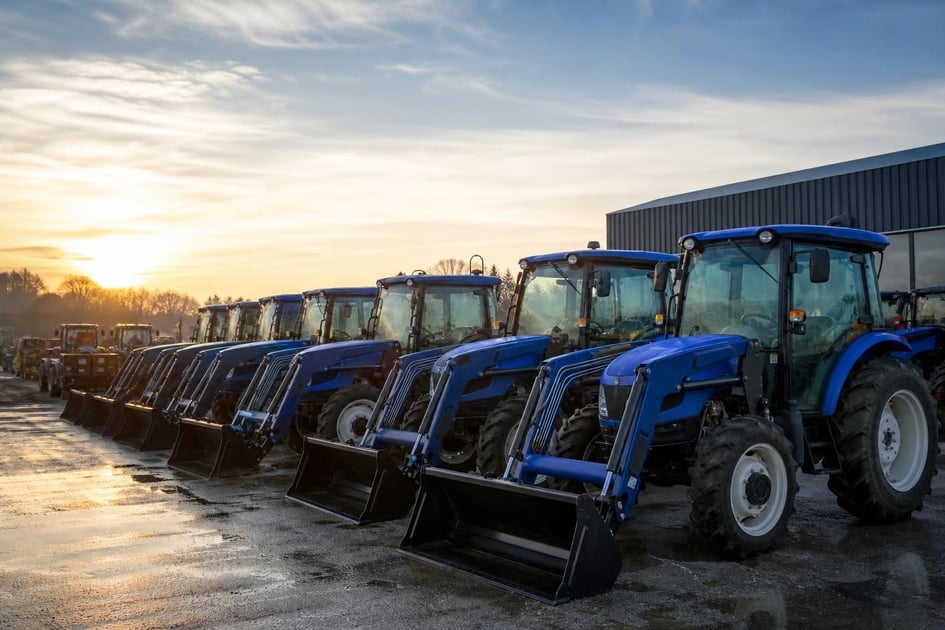
Row-crop operations use 100- to 300-horsepower tractors for tillage, planting, and harvesting. Because farm income is seasonal, lenders often structure payments to match cash flow: higher payments after harvest, lower payments during planting season. Agriculture equipment financing from Provide Capital accommodates these seasonal cycles, and the equipment itself secures the loan.
Construction and Land Clearing
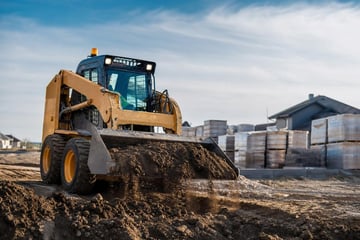
Utility tractors with loader attachments move material on job sites too small for a full excavator. Contractors often need the machine quickly to capture a project bid. Same-day approvals are possible when the borrower has clean credit and the equipment is ready for immediate sale. Contractors who also need hauling capability can explore Dump Trucks financing under the same structure.
Forestry and Land Management
Forestry tractors and skidders work in harsh conditions. Lenders scrutinize the hour meter and maintenance records closely because these machines wear faster than agricultural units. A well-documented service history can be the difference between 100 percent financing and a required down payment.
Landscaping and Grounds Maintenance
Compact tractors under 50 horsepower are popular with commercial landscaping companies. These machines cost less—often $20,000 to $40,000—so they fall well within zero-down thresholds even for newer businesses. The key is matching the loan term to the machine's expected useful life; financing a compact tractor over 72 months makes sense only if you plan to run it that long.
Common Mistakes Owners Make
Even experienced buyers trip over the same obstacles when financing tractors with no money down.
Buying more machine than the work requires. A 200-horsepower tractor looks impressive, but if your average job needs 75 horsepower, you are burning fuel and depreciation on unused capacity. The lender may also question whether the revenue justifies the payment.
Ignoring the total cost of ownership. Zero down preserves cash today, but you still pay interest, insurance, maintenance, and repairs. Run a five-year ownership worksheet that includes all costs, not just the monthly payment.
Skipping the equipment inspection. On used tractors, a $300 fluid analysis and compression check can reveal hidden engine or transmission problems. Discovering a bad hydrostatic drive after you have signed the loan documents does not reduce your obligation to the lender.
Neglecting to shop the equipment price separately from the financing. Dealers sometimes inflate the sale price to offset a below-market financing promotion. Get a firm equipment price in writing before you discuss terms. Tractors financing through an independent lender like Provide Capital keeps the two transactions separate, which usually saves money.
What Happens After You Apply
Once you submit your application and equipment details, the lender reviews your credit, verifies the equipment value, and issues a decision. For transactions under $250,000, this can happen the same day. Larger deals may take 24 to 48 hours while the lender confirms the collateral value through auction data or an appraisal.
After approval, you receive a term sheet showing the monthly payment, term length, and any fees. Read it carefully. If the structure matches your expectations, you sign and the lender pays the dealer or private seller directly. You take delivery and begin using the tractor immediately. The first payment is typically due 30 to 45 days after funding.
If you are ready to move forward, get a same-day decision on your equipment and keep your cash reserves intact.
Put the right equipment to work
From $5,000 to $5 million, new or used, Provide Capital helps businesses nationwide finance the equipment they need.
Apply TodayFrequently Asked Questions
Can I really finance a tractor with absolutely no money down?
Yes, if your credit and business history meet the lender's standards and the equipment qualifies. The lender advances 100 percent of the purchase price or the appraised value, whichever is lower. You pay no cash at closing, though you may owe document fees or filing costs.
Does no down payment mean a higher interest rate?
Rates vary by credit profile, equipment age and term. A zero-down loan does not automatically carry a penalty rate, but borrowers with weaker credit may see higher costs regardless of down payment. Strong credit and new equipment usually produce the most competitive structure.
What credit score do I need for zero-down tractor financing?
There is no hard cutoff, but borrowers with scores in the mid-600s and above generally see the best zero-down offers. If your score is below that, the lender may still approve the deal but require 10 to 20 percent down to reduce risk.
Can I finance a private-party tractor purchase with no down payment?
Yes, many lenders finance private sales. The process requires a purchase agreement, verification of the seller's ownership, and often an inspection. The lender pays the seller directly after you sign the loan documents.
How long can I finance a tractor?
Terms typically range from 24 to 72 months. New tractors can stretch to 72 months, while used tractors usually top out at 60 months. Older equipment may be limited to 36 or 48 months.
Will financing a tractor help my business credit?
Yes, if the lender reports to business credit bureaus. Making on-time payments on an equipment loan builds your company's credit profile, which can make future borrowing easier and less expensive.
What happens if I need to sell the tractor before the loan is paid off?
You must pay off the remaining balance to clear the lender's lien. If the tractor is worth more than the payoff, you keep the difference. If it is worth less, you must cover the shortfall out of pocket or roll it into a new loan.
Can I bundle attachments and implements into the same zero-down loan?
Usually yes, as long as the total financed amount stays within the lender's advance limits and the attachments are essential to the tractor's function. A loader, mower deck, or backhoe can often be included. Aftermarket cosmetic items may be excluded.
Next Steps
Zero-down tractor financing is a practical way to add revenue-producing equipment without draining the cash you need for payroll, fuel, and materials. The key is matching the machine to the work, understanding the total cost of ownership, and choosing a lender that moves quickly. At Provide Capital, we serve construction, healthcare, dental, restaurant and food service, manufacturing, transportation, agriculture, HVAC and forestry nationwide, and same-day approvals are possible when the deal is straightforward.
Collect your equipment quote, gather your last three months of bank statements, and talk to a specialist about your specific machine. We can review your scenario and give you a clear picture of what zero-down financing looks like for your business.
For broader context on how equipment loans fit into your capital strategy, the SBA's guide to buying business assets and equipment offers a useful framework. If you want to understand how equipment financing fuels growth, Forbes Finance Council's overview covers the strategic angle. Finally, U.S. Census Bureau data can help you benchmark your local market against national trends.
Disclaimer: The information provided in this article is for general educational purposes only and is not financial, legal, or tax advice. Funding terms, qualifications, and product availability may vary and are subject to change without notice. Provide Capital does not guarantee approval, rates, or specific outcomes. For personalized information about your business funding options, contact our team directly.