What an Agriculture Equipment Financing Calculator Actually Tells You
An agriculture equipment financing calculator gives you an estimated monthly payment based on the equipment's price, your intended down payment, the repayment term, and your credit profile. It will not lock in a rate or guarantee an approval. What it does is show you whether a $180,000 combine or a $45,000 tractor fits your monthly budget before you spend time on an application.
The calculators you find on lender websites use standard amortization math. You enter the equipment cost, a down payment percentage—often 10 to 20 percent for agricultural equipment—and a term ranging from 24 to 84 months. The output is a principal-plus-interest payment. Some calculators also show an estimated total cost of ownership, though that figure rarely includes insurance, maintenance, or fuel.
For farmers and ranchers, the calculator is most useful when run against multiple scenarios. A three-year term on a $120,000 piece of equipment produces a very different monthly obligation than a five-year term. The shorter term costs less over time but demands higher monthly cash flow during the winter months when revenue may be low. The longer term eases winter pressure but increases the total interest paid. Run both numbers before you decide.
Key Insight: Most agricultural lenders structure payments to align with your harvest cycle. If you finance a combine in November, you may be able to arrange a payment schedule that starts heavier in September and October rather than demanding equal payments year-round. Ask your financing specialist whether seasonal payment structures are available for your operation.
Already have a machine in mind?
Provide Capital finances new and used equipment from $5,000 to $5 million, with same-day decisions possible.
Apply NowHow Equipment Financing Works for Farms and Ranches
Equipment financing for agriculture works on a simple collateral model: the tractor, combine, harvester, or irrigation system you are buying serves as the security for the loan. Because the lender has a direct interest in a tangible, revenue-producing asset, rates are typically more competitive than unsecured borrowing. Rates vary by credit profile, equipment age and term. New equipment from major manufacturers like John Deere, Case IH, or Kubota usually commands the strongest terms because the collateral retains value well.
Loan amounts range widely. Provide Capital finances new and used business equipment from $5,000 to $5 million. That covers everything from a mid-size utility tractor for a small hay operation to a full fleet of combines for a large Midwestern grain farm. The equipment itself is the collateral, which keeps rates competitive. Same-day approvals are possible if you have your documentation organized and the equipment specification sheet ready.
The application process starts with a credit review and an evaluation of the equipment. Lenders look at your personal and business credit, time in operation, and annual revenue. They also verify the equipment's condition, year, hours, and market value. For used equipment, an independent appraisal may be required on transactions above certain thresholds. The Small Business Administration notes that equipment loans are among the most common forms of small-business financing because the collateral reduces lender risk.
New vs. Used Agriculture Equipment: Financing Differences
New equipment carries lower rates and longer available terms because depreciation is predictable and warranty coverage protects the asset. Used equipment, especially machines with more than 5,000 hours or older than ten model years, may require a larger down payment or a shorter term. The lender's risk increases as the collateral's remaining useful life shrinks.
| Factor | New Equipment | Used Equipment |
|---|---|---|
| Typical down payment | 10–15% | 15–25% |
| Maximum term | Up to 84 months | Usually 36–60 months |
| Rate structure | Most competitive | Varies by age and hours |
| Warranty status | Manufacturer warranty | As-is or third-party |
| Documentation needed | Invoice or purchase order | Appraisal plus inspection |
Used equipment can make strong financial sense for operations that need capability without the new-equipment premium. A three-year-old tractor with 1,200 hours often sells for 30 to 40 percent less than new while retaining 80 percent of its productive life. The key is matching the financing term to the machine's realistic remaining lifespan. Financing a 15-year-old baler over seven years is risky; if the machine fails in year four, you still owe payments on an asset that no longer generates revenue.
Calculating Your Real Cost: Factors Beyond the Monthly Payment
The calculator shows your payment, but your real cost includes several layers. Understanding them keeps you from approving a deal that looks affordable on paper but strains your cash flow in practice.
Down Payment Requirements
Most agricultural equipment loans require 10 to 20 percent down. On a $250,000 combine, that means $25,000 to $50,000 out of pocket before you take delivery. Some lenders offer zero-down programs for highly qualified borrowers, but these usually result in higher monthly payments or shorter terms. Putting more down reduces your total interest cost and lowers the lender's risk, which can improve your rate.
Term Length and Total Interest
A 60-month term on $200,000 at a competitive rate produces a lower monthly payment than a 36-month term, but the total interest paid over the life of the loan is significantly higher. For equipment that will be used heavily for ten or more years, the longer term may still make sense. For specialized equipment that you may upgrade in three years, a shorter term prevents you from paying interest on an asset you no longer own.
Tax Treatment for Tax Year 2026
For tax year 2026, Section 179 allows businesses to deduct the full purchase price of qualifying equipment in the year it is placed in service, subject to annual limits and phase-out thresholds. The exact dollar limits for 2026 are set by the IRS and adjusted periodically. Bonus depreciation, which has been phasing down from 100 percent, may apply at a reduced percentage for 2026 depending on current law. Because these figures change and your specific situation depends on farm income, entity structure, and other deductions, consult a CPA before making a purchase decision based on tax benefits. Do not assume you can write off the entire cost without confirming the current-year limits.
By the Numbers: A grain operation financing $400,000 in harvest equipment over five years with a 15 percent down payment will invest roughly $60,000 upfront. Over the term, the difference between a 36-month and 60-month structure can amount to tens of thousands in total interest, even when rates vary by credit profile, equipment age and term. Run the numbers on both term lengths before signing.
Qualification Criteria for Agricultural Equipment Financing
Lenders evaluate agricultural equipment loans on four main pillars: credit history, time in business, revenue stability, and the equipment itself.
Credit Profile
Most equipment lenders want to see a personal credit score in the mid-600s or higher for the primary guarantor. Strong credit unlocks longer terms and lower down payments. If your score is below that threshold, you may still qualify, but expect a larger down payment requirement or a shorter term. Business credit matters too, especially if the farm or ranch operates as an LLC or corporation with established trade lines.
Time in Business
Two or more years of operating history strengthens your application because the lender has tax returns and bank statements to verify revenue patterns. Startups or new businesses face higher scrutiny, though established farms adding a second location or a new enterprise may be treated differently. Lenders understand that a family operation with 20 years of history poses less risk than a first-year venture, even if the new venture is well-capitalized.
Revenue and Debt Service Coverage
Lenders calculate your debt service coverage ratio by comparing your annual net operating income to your total annual debt payments, including the new equipment loan. A ratio above 1.25 is generally preferred, meaning your operation generates $1.25 in income for every $1.00 in debt obligations. Seasonal operations may need to show averaged income across multiple years or provide projections that account for off-season gaps.
Equipment Specifications
The lender will verify the make, model, year, serial number, hours, and condition. For private-party used equipment, a purchase agreement and inspection report are standard. For dealer purchases, the invoice usually suffices. Equipment from major brands with strong dealer networks is easier to finance because resale values are established.
Pro Tip: Before you apply, gather the last three years of tax returns, six months of business bank statements, a current equipment quote or purchase agreement, and your driver's license. Having these ready can move you from application to approval within hours rather than days. If you are buying at auction, pre-qualification is essential because auction houses rarely hold inventory while you wait for a decision.
Common Equipment Types and Their Financing Profiles
Agricultural equipment covers a wide spectrum, and lenders treat each category differently based on collateral value and market demand.
Tractors and Combines
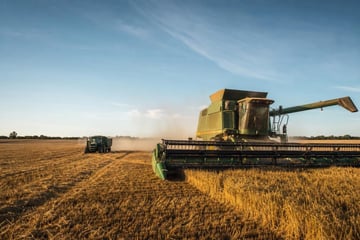
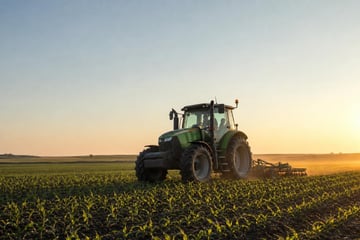
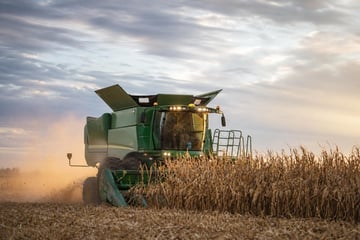
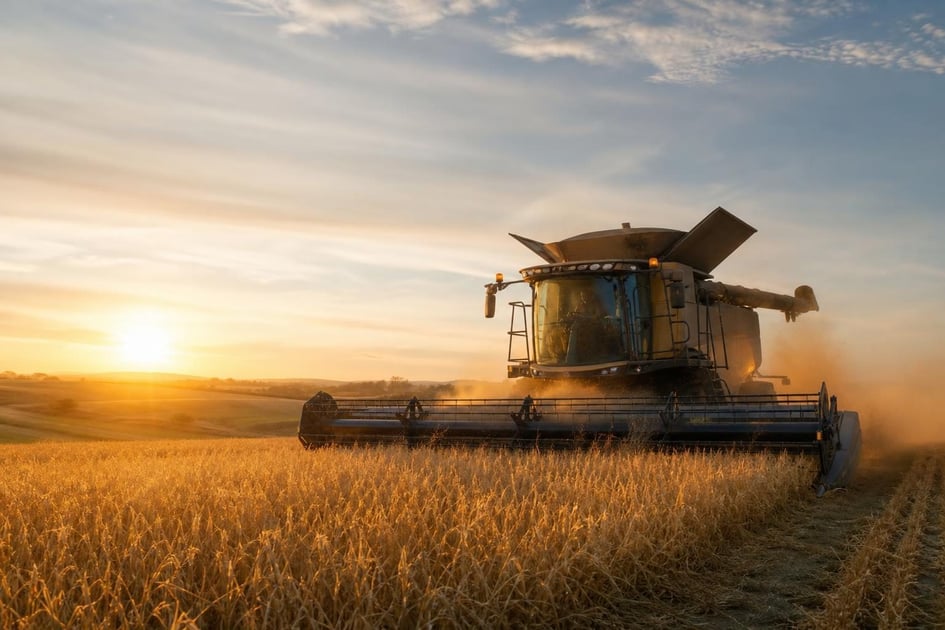
Row-crop tractors and combines are the most straightforward to finance. They hold value, have liquid resale markets, and are essential to core operations. A new 300-horsepower tractor might run $250,000 to $400,000, while used models from recent years often fall in the $150,000 to $250,000 range. Combines typically range from $300,000 to over $600,000 new, with late-model used machines starting around $180,000.
Harvesters and Specialized Machinery
Cotton pickers, sugar cane harvesters, and potato diggers serve narrower markets. Financing is available, but terms may be slightly less generous because the resale pool is smaller. If you operate in a specialized crop region, work with a lender who understands your equipment's regional value. A cotton picker in the Texas Panhandle has different collateral characteristics than the same machine in dairy country.
Irrigation, Handling, and Support Equipment
Pivot irrigation systems, grain dryers, and feed mixers are often financed alongside tractors and combines. These assets may have longer useful lives than field equipment but can be harder to repossess and resell. Some lenders group them under real-property or equipment financing depending on whether they are permanently installed. Wheel Loaders financing is also common for operations that need material handling for feed, grain, or manure management.
For operations with diverse equipment needs, financing multiple assets under a single facility can reduce paperwork and lock in consistent terms. Agriculture equipment financing specialists can structure master agreements that let you add equipment over time without re-qualifying from scratch.
Find the right financing structure
Tell us about the equipment you need and we will show you the options that fit your business.
See Your OptionsLease vs. Loan: Which Structure Fits Your Operation?
Farmers sometimes assume financing always means a loan. Leasing is a valid alternative, especially for equipment you plan to upgrade frequently or for assets that depreciate quickly.
| Factor | Equipment Loan | Equipment Lease |
|---|---|---|
| Ownership | You own the equipment after final payment | Lessor owns; you may have a purchase option |
| Down payment | Typically 10–20% | Often lower or zero |
| Monthly payment | Higher, but builds equity | Lower, but no equity |
| Tax treatment | Depreciation and Section 179 for owner | Lease payments deducted as expense |
| End of term | Free and clear ownership | Return, renew, or buy at fair market value |
| Best for | Core equipment kept 7+ years | Technology-heavy equipment replaced often |
Loans make sense for foundational assets: your primary tractor, the combine you run for fifteen years, the irrigation system that stays with the land. Leases work better for precision agriculture technology that becomes obsolete in three to four years. If you are unsure which structure preserves more cash flow, ask your accountant to model both options against your projected 2026 and 2027 income.
Key Insight: Leasing can preserve your line of credit for operating expenses like seed and fertilizer. Many grain operations lease GPS-enabled planters and tractors while owning their combines outright. This hybrid approach matches financing structure to how long each asset stays productive.
Industry-Specific Considerations for Agricultural Buyers
Agriculture is not a monolithic industry. A dairy in Wisconsin, a citrus grove in Florida, and a wheat operation in Kansas face different equipment needs, cash flow timing, and lender expectations. According to Reuters business coverage, farm operators continue to face rising equipment costs and are increasingly turning to collateral-based financing to preserve working capital.
Seasonal Buying Patterns
Most equipment purchases happen in two waves: late fall and winter, when tax planning drives decisions, and early spring, when operators prepare for planting. Winter buyers often have more negotiating leverage because dealers are clearing inventory. Spring buyers may pay a premium but get the latest technology before the season starts. If you need equipment for a specific season, start the financing conversation 60 to 90 days before you need delivery. Same-day approvals are possible, but waiting until the week before planting to finance a tractor is unnecessary stress.
Dominant Industries and Equipment Mix
According to Census Bureau data, grain and oilseed farming, dairy, and beef cattle ranching represent the largest segments of U.S. agriculture by operation count. Each segment runs different equipment profiles. Grain operations invest heavily in combines, planters, and large tractors. Dairy farms prioritize feed handling, milking parlor equipment, and waste management systems. Beef operations need handling equipment, trailers, and pasture maintenance tools. When you speak with a financing specialist, mention your specific segment. The lender can match you with an underwriter who understands why a dairy needs a mixer wagon, not a combine.
Used Equipment from Dealer vs. Auction
Dealer purchases offer warranties, service records, and straightforward invoicing. Auction purchases can yield lower prices but require faster payment and more due diligence. If you buy at auction, have your financing pre-approved. Many auction houses require full payment within 24 to 72 hours. A pre-approved facility lets you bid with confidence and close on time. Skid Steers financing is a frequent auction purchase for ranchers expanding their material handling capabilities.
Documentation You'll Need to Apply
Having your paperwork ready is the single biggest factor in how fast you get a decision. Here is what most agricultural equipment lenders request:
- Business and personal tax returns: Last two to three years, including all schedules. These show income stability and depreciation history.
- Business bank statements: Last three to six months. Lenders look for consistent deposits, overdraft patterns, and average balances.
- Equipment quote or purchase agreement: Must include make, model, year, serial number, hours, and sale price. For used private-party sales, include photos and inspection reports.
- Business formation documents: Articles of incorporation, operating agreement, or partnership documents.
- Personal identification: Driver's license for all guarantors.
- Proof of insurance: Some lenders require proof of property and liability coverage before funding.
For larger transactions approaching $1 million or more, lenders may also request a current balance sheet, accounts receivable aging, and a brief narrative about how the equipment will increase revenue or reduce costs. The narrative does not need to be elaborate—two paragraphs explaining that the new combine will let you harvest an additional 500 acres before weather windows close is sufficient.
What Happens After You Apply
Once you submit a complete application, the review process typically moves through three stages: credit and background review, equipment valuation, and approval with term sheet.
The credit review usually takes a few hours for straightforward applications. The lender pulls credit reports and verifies your identity and business existence. Equipment valuation may involve a desktop review of comparable sales or a physical inspection for high-value used assets. For new equipment, the dealer invoice often suffices.
Approval comes as a term sheet outlining the loan amount, down payment, term, payment amount, and any collateral requirements. Read this carefully. The term sheet is not the final contract, but it commits the lender to the stated terms assuming nothing changes. If you accept, the lender moves to documentation and funding. For dealer purchases, funds are typically sent directly to the seller. For private-party sales, the lender may issue a check or wire to the seller once title transfer is verified.
See what you qualify for before you start shopping in earnest. A pre-approval letter tells dealers you are serious and gives you a firm budget ceiling.
Common Mistakes to Avoid
Even experienced operators make errors when financing equipment. Avoiding these pitfalls saves money and frustration.
Overextending on Term Length
A seven-year term on a tractor you plan to trade in four years creates negative equity. You owe more than the machine is worth, which complicates the trade or forces you to write a check to clear the lien. Match your term to your realistic holding period, plus one year of buffer.
Ignoring Total Cost of Ownership
The monthly payment is only part of the equation. Fuel, maintenance, insurance, and storage add thousands annually. A cheaper machine with higher fuel consumption or scarce parts availability can cost more over five years than a newer, more efficient model with a slightly higher payment.
Skipping the Pre-Purchase Inspection
For used equipment, hire a qualified mechanic to inspect the engine, hydraulics, transmission, and undercarriage before you finalize financing. The $300 to $500 inspection fee is trivial compared to discovering a blown engine in month two. Lenders sometimes require this; even when they do not, do it anyway.
Ready to move forward?
More than 10,000 businesses have financed equipment with Provide Capital. See what you qualify for today.
Get StartedFrequently Asked Questions
Can I finance equipment from a private seller?
Yes. Private-party sales are common in agriculture. You will need a purchase agreement, proof of the seller's ownership, and usually an inspection. The lender may handle the title transfer and lien filing directly.
Does financing require a personal guarantee?
Most agricultural equipment loans require a personal guarantee from the primary owners, especially for closely held family farms. This is standard practice and does not reflect poorly on your business.
How fast can I get funded?
With complete documentation, same-day approvals are possible. Funding typically occurs within 24 to 72 hours after approval, though complex transactions or used equipment requiring appraisal may take slightly longer.
Can I finance attachments and implements separately?
Attachments like loaders, mowers, and tillage equipment can often be financed with the primary machine or on a separate schedule. Bundling them usually simplifies the paperwork and may improve the overall rate because the total transaction size is larger.
What happens if I sell the equipment before the loan is paid off?
You must pay off the remaining balance to clear the lender's lien before transferring title. Some loans have prepayment penalties; others do not. Ask about prepayment terms before you sign.
Can I refinance existing equipment to free up cash?
Refinancing or sale-leaseback transactions are available for equipment you already own outright. The lender appraises the equipment and advances a percentage of its value. This can provide working capital for seed, fertilizer, or labor costs.
Do you finance equipment for organic or specialty crop operations?
Yes. Specialty crop operations—organic vegetables, orchards, vineyards—qualify for the same equipment financing as conventional row-crop farms. The equipment list differs, but the lending criteria are similar.
Is there a minimum or maximum equipment value you finance?
Provide Capital finances new and used business equipment from $5,000 to $5 million. Whether you need a $15,000 rotary cutter or a $1.2 million cotton picker, the collateral-based structure keeps rates competitive.
Get a Decision on Your Next Machine
An agriculture equipment financing calculator is a starting point, not a finish line. The real work is matching the right equipment, term, and structure to your operation's cash flow and growth plans. Gather your financials, know your equipment specs, and talk to a specialist who understands seasonal agriculture.
Get a same-day decision on your equipment and know exactly what you can spend before you negotiate with the dealer or bid at auction. The right financing structure keeps your operation moving through planting, harvest, and every season in between.
Disclaimer: The information provided in this article is for general educational purposes only and is not financial, legal, or tax advice. Funding terms, qualifications, and product availability may vary and are subject to change without notice. Provide Capital does not guarantee approval, rates, or specific outcomes. For personalized information about your business funding options, contact our team directly.