Yes, you can finance construction equipment with no money down. The equipment itself serves as collateral, which means you do not have to tie up cash or property to secure the loan. Provide Capital finances new and used business equipment from $5,000 to $5 million, and same-day approvals are possible once your documentation is in order. Rates vary by credit profile, equipment age and term, but the structure keeps your liquidity intact while you put the machine to work.
This matters for owner-operators who are mid-purchase. You have found the excavator, skid steer or dump truck you need, and the seller wants to close. A no-money-down equipment loan lets you close without draining the operating account you rely on for payroll and fuel. According to SBA guidance on equipment financing and leasing, collateral-based structures let businesses acquire machinery without large upfront outlays.
How No-Money-Down Equipment Financing Works
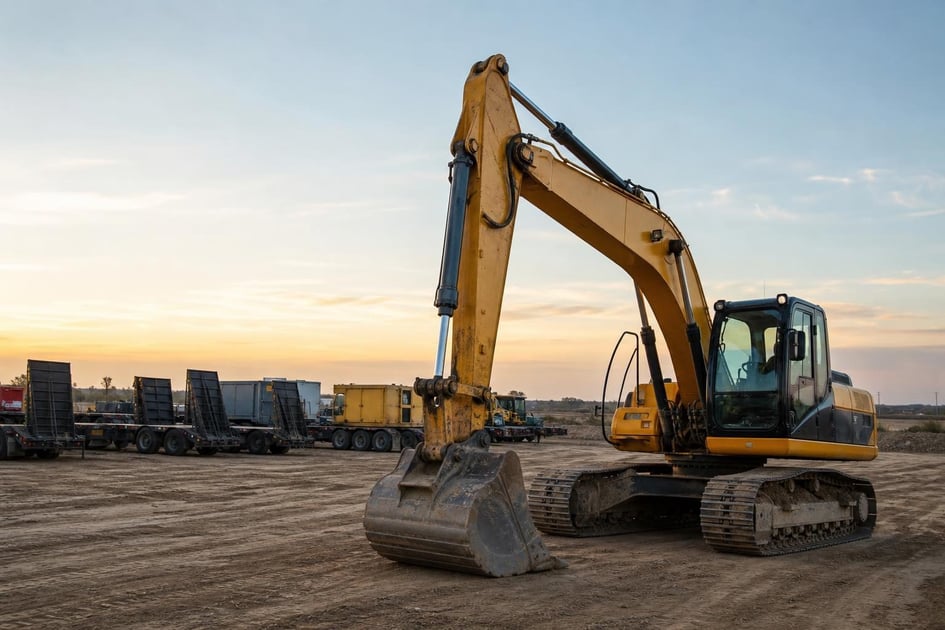
Traditional term loans often require real estate or a large cash deposit as security. Equipment financing flips that model. The lender takes a security interest in the machine you are buying. If you finance a $75,000 excavator, the excavator is the collateral. Because the lender has a hard asset backing the note, you can often qualify without putting 10 or 20 percent down.
The lender files a UCC-1 lien against the equipment and sometimes requires a first-payment warranty or insurance binders, but it does not require you to hand over a stack of cash at closing. That preserves your working capital for labor, materials and the unexpected costs that appear on every job site.
Collateral-Based Lending
Collateral-based lending means the underwriter focuses on the value and useful life of the asset more than on your balance sheet alone. A five-year-old wheel loader with strong auction values can secure a loan even if your credit is imperfect. Conversely, a brand-new attachment with limited resale data may require additional documentation. The key is that the equipment must retain enough value to cover the remaining balance through the term of the loan.
What No Down Payment Means for Your Cash Flow
A zero-down structure does not mean zero out-of-pocket cost. You will still owe the first monthly payment, documentation fees, and any sales tax or title costs required by your state. What it does mean is that you are not required to deplete your cash reserves to acquire the asset. For a contractor running on thin margins between progress draws, that distinction can be the difference between taking the job and passing on it.
Key Insight: Lenders often require a personal guarantee on no-money-down deals even though the equipment is the primary collateral. That guarantee is not a down payment, but it does mean your personal credit and assets are on the hook if the business defaults. Read the guarantee language carefully before you sign.
Get a fast decision on your equipment
Applying takes just a few minutes, and decisions can come as soon as the same day.
Start Your ApplicationWhat Equipment Qualifies
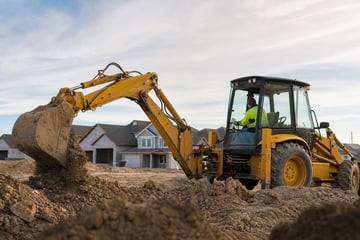
Provide Capital finances a wide range of construction assets. Eligible equipment includes earth movers, lifting equipment, trucks and compact machines. If the asset has a serial number, a recognized manufacturer and a measurable useful life, it likely qualifies.
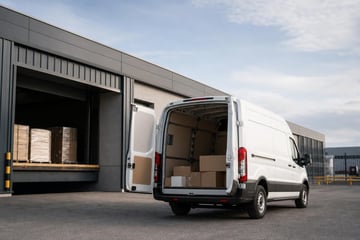
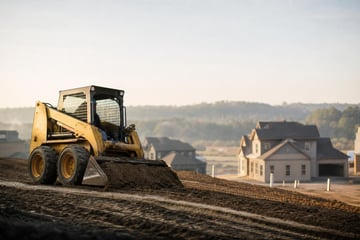
Common examples include Skid Steers financing for landscaping and site-prep crews, Wheel Loaders financing for aggregate and roadwork, and Dump Trucks financing for material haulers. We also finance Bucket Trucks financing for electrical and tree contractors, plus Scissor Lifts financing for interior trades. If you are unsure whether your specific machine qualifies, a quick conversation with a specialist can clear it up.
New vs. Used Equipment Financing
New machines carry full manufacturer warranties and lower maintenance risk, but they also depreciate sharply in the first 24 months. Used equipment costs less upfront and holds value more steadily, yet it can carry higher repair bills. The right choice depends on your utilization rate, the availability of service in your area, and how long you plan to keep the asset.
From a financing perspective, new equipment often qualifies for longer terms because the lender is comfortable with the remaining useful life. Used equipment may be capped at 36 or 48 months if the machine is already seven or eight years old at origination. Rates vary by credit profile, equipment age and term, so a newer machine does not automatically mean a lower rate, but it usually means a longer amortization and a smaller monthly payment.
| Factor | New Equipment | Used Equipment |
|---|---|---|
| Typical financing term | 48–72 months | 24–60 months |
| Down payment requirement | Often $0 | Often $0 |
| Warranty coverage | Full manufacturer warranty | Limited or expired |
| Monthly payment range (illustrative) | Lower due to longer term | Higher or shorter term |
| Insurance requirement | Standard physical damage | Standard physical damage; older units may need additional inspection |
| Ideal for | High-utilization fleets | Owner-operators adding a second or third machine |
By the Numbers: A contractor who buys a $55,000 used skid steer and finances it over 48 months may pay roughly the same monthly outlay as a contractor who buys an $85,000 new machine on a 72-month term. The total interest paid on the longer new-machine loan can be higher even though the rate is similar, because the principal outstanding lasts an extra two years.
Leasing vs. Financing: Which Keeps More Cash in Your Business?
Leasing and financing both allow you to acquire equipment without a large initial outlay, but they treat ownership, maintenance and taxes differently. A loan puts the title in your name immediately; a lease leaves the title with the lessor until you exercise a purchase option.
If you plan to run the machine until the engine gives out, financing is usually the better fit. You build equity with every payment, and you can sell or trade the asset whenever you want. If you need the latest technology every three years—think telematics upgrades or emission-compliant engines—a lease may be more attractive because you simply return the machine at the end of the term and upgrade.
One detail many contractors miss: leases often include mileage or hour limits. A financed machine has no usage cap. If you run double shifts during the summer paving season, those extra hours can trigger overage penalties on a lease that do not exist on a loan.
| Consideration | Equipment Loan | Equipment Lease |
|---|---|---|
| Ownership | You own the asset; lender holds a lien | Lessor owns the asset; you have use rights |
| End-of-term option | Free and clear title | Return, renew or buy at fair market value |
| Usage restrictions | None | Hour or mileage limits may apply |
| Tax treatment (general) | Depreciation and Section 179 deduction | Lease payments typically expensed; confirm with your CPA |
| Best for | Long-term hold, high hours, resale value | Short-term needs, rapid technology turnover |
Rates vary by credit profile, equipment age and term for both products, so the cheapest option on paper depends on your specific credit history and the age of the machine. See what you qualify for and compare the amortization schedules side by side before you decide.
Who Qualifies?
No-money-down construction equipment financing is not limited to perfect-credit borrowers, but there are thresholds. Underwriters look at three things: your personal credit, your time in business, and the equipment itself.
Credit Profile
Most equipment lenders want to see a personal credit score above 600 for zero-down approvals on construction assets. Scores in the mid-500s may still qualify, but they often require a shorter term, a stronger equipment valuation, or a co-signer. Bankruptcies discharged within the last 12 months are usually a stopper; bankruptcies older than two years with re-established credit are often workable. The lender is also looking for open trade lines and a history of paying comparable obligations on time.
Time in Business
Two years in business under the same tax ID is the unofficial sweet spot. Companies in their first year of operation with no filed tax returns are generally not eligible for no-money-down programs. If you have 12 to 24 months of operation, you may still qualify, but the lender may cap the advance at a lower loan-to-value ratio or ask for additional verification of revenue.
Equipment Age and Condition
Lenders prefer equipment that is 10 years old or newer at the end of the loan term. That means a 2018 excavator can be financed over 48 months, but a 2012 model may be limited to 24 months. The machine must also have a clean title, no salvage branding, and a verifiable serial number. Auction or dealer appraisals are often used to confirm value.
Pro Tip: If you are buying a used machine from a private party, order an independent equipment inspection before you apply. Lenders will often accept a third-party appraisal that is less than 30 days old, and it can prevent a nasty surprise if the seller’s advertised hours do not match the controller readout.
See what you qualify for
The equipment itself secures the financing, which keeps rates competitive. Checking your options takes minutes.
Check Your OptionsTax Treatment for the 2026 Tax Year
For the 2026 tax year, Section 179 of the Internal Revenue Code allows businesses to deduct the full purchase price of qualifying equipment up to a statutory dollar limit. Because Congress adjusts that limit periodically, you should confirm the exact 2026 ceiling with your CPA before you file. In addition, bonus depreciation may be available for qualifying new and used equipment, though the percentage for 2026 may differ from prior years. Your tax advisor can model whether Section 179, bonus depreciation, or standard MACRS yields the best outcome for your bracket.
If you lease instead of buy, you generally deduct the lease payments as an operating expense. The deductibility is not dependent on the Section 179 cap, but the total write-off over the life of the lease may be less aggressive than an upfront deduction. Again, a CPA who knows your specific situation should run the numbers.
Real-World Cost Examples
The best way to understand no-money-down financing is to walk through a few scenarios. These figures are illustrative; your actual payment will depend on credit, equipment age, term and fees.
Scenario 1: Used Skid Steer
A site-prep contractor buys a 2021 skid steer for $52,000. He finances it over 48 months with no money down. Depending on credit and the age of the machine, his monthly payment might fall between $1,150 and $1,450. Over four years he builds equity in a machine he uses 800 hours per season, and he owns it free and clear when the note matures.
Scenario 2: New Wheel Loader
A roadwork contractor adds a new wheel loader priced at $180,000. She opts for a 60-month term with zero down. Because new equipment qualifies for longer amortization, her monthly payment might range from $3,200 to $3,800. She takes the Section 179 deduction on her 2026 return—subject to the current-year limits—reducing her net cost.
Scenario 3: Dump Truck for a Hauler
An independent hauler purchases a 2019 dump truck for $95,000. The lender approves a 42-month term with no down payment. His monthly outlay lands between $2,300 and $2,700. The shorter term means higher payments but less total interest and a faster path to an unencumbered title.
In every case, the equipment itself secures the loan, which is why zero down is possible. Rates vary by credit profile, equipment age and term, so the only way to get a precise quote is to submit an application and a vendor invoice or equipment listing.
Industry-Specific Use Cases
General Contractors
General contractors often need a versatile fleet to bid on different project types. A GC might finance a telehandler for a six-month school build, then move it to a municipal job. No-money-down financing lets the GC acquire the machine when the contract is awarded rather than months in advance. That aligns the debt service with the revenue stream from the project. U.S. Census Bureau construction spending data shows that contractor investment in equipment tracks closely with overall construction outlays, so timing your purchase to contract awards makes financial sense.
Specialty Trades
Excavation, concrete, utility and forestry contractors tend to run fewer machines but run them harder. A trenching contractor might need a single dedicated mini-excavator with a thumb attachment. Because the machine is the collateral, the contractor can finance 100 percent of the machine plus the attachment, preserving cash for pipe and shoring materials. Construction equipment financing is built around these exact scenarios.
Common Mistakes to Avoid
Underestimating Soft Costs
Freight, rigging, initial maintenance fluid changes and insurance binders can add $3,000 to $8,000 to the total project cost. If you finance only the invoice price of the machine, you will pay those soft costs out of pocket. Ask your lender whether freight and attachments can be rolled into the loan. Some lenders allow it; others cap the advance at the equipment cost alone.
Stretching the Term Too Long
A 72-month term on a used machine that will be fully depreciated in five years leaves you underwater in the final year. If you try to sell or trade the machine at month 60, you may owe more than it is worth. Match the term to the useful life of the asset, not just the maximum the lender will offer.
Ignoring Seasonal Cash Flow
Construction is seasonal in most of the country. A loan with identical monthly payments year-round can strain a paving contractor in January when work is frozen. Some lenders offer seasonal skip-payment structures for construction borrowers. Ask whether your payment schedule can flex with your revenue cycle.
Documentation You Need
A clean application speeds up approval. Have the following ready before you submit:
- A completed one-page application with business and personal information
- The last three months of business bank statements
- A vendor invoice or equipment listing with serial number, year, make and model
- Proof of insurance that names the lender as loss payee
- A copy of your driver’s license or passport
- Your most recent business tax return (two years preferred)
If you are buying from a private party rather than a dealer, add a bill of sale and a title search. Same-day approvals are possible when the file is complete and the equipment valuation is straightforward.
What Happens After You Apply
Once you submit the application and equipment details, the underwriter runs credit, verifies the equipment value through a pricing guide or appraisal, and reviews your bank statements for cash flow. For deals under $250,000, this can happen in hours. For larger transactions or specialized equipment, it may take one to two business days.
If approved, you receive a term sheet outlining the monthly payment, term, fees and any conditions. You sign the documents, the lender pays the vendor or private seller directly, and you take delivery. The first payment is typically due 30 to 45 days after funding. As Forbes notes on using equipment financing for growth, tying debt to a revenue-producing asset preserves liquidity better than unsecured credit. Get a same-day decision on your equipment by starting the application now.
Ready to move forward?
More than 10,000 businesses have financed equipment with Provide Capital. See what you qualify for today.
Get StartedFrequently Asked Questions
Can I really get construction equipment with no down payment?
Yes. The equipment itself acts as collateral, so many lenders do not require a cash down payment. You will still need to cover insurance, taxes and the first monthly payment.
Does my credit score have to be perfect?
No. Many no-money-down programs accept personal credit scores starting in the low 600s. Lower scores may require a shorter term or additional documentation, but they are not automatically disqualified.
Can I finance used equipment?
Yes. Used equipment is eligible as long as it has a clean title, a verifiable serial number, and enough remaining useful life to cover the loan term. Most lenders cap used-equipment terms based on the machine’s age at payoff.
How fast can I get approved?
Same-day approvals are possible for transactions with complete documentation and clear credit. Larger deals or specialized machinery may take one to two business days.
Can I include attachments, warranties and freight in the loan?
Sometimes. Some lenders allow soft costs to be rolled into the equipment loan; others finance only the machine itself. Ask your specialist before you structure the deal.
What happens if I want to pay off the loan early?
Most equipment loans have a fixed term, but many do not charge a prepayment penalty after a certain period. Review the loan agreement for specific prepayment language before you sign.
Is the interest tax deductible?
Generally, yes. Interest on business equipment loans is a deductible business expense. In addition, you may be able to deduct the equipment cost through Section 179 or bonus depreciation for the 2026 tax year. Confirm the exact deductions with your CPA.
Can I finance equipment from a private seller?
Yes, as long as the seller can provide a clean title and a bill of sale. The lender will still require an equipment inspection or appraisal to confirm value before funding.
Ready to Add a Machine to Your Fleet?
No-money-down construction equipment financing is designed for owner-operators who need to move fast without draining their operating accounts. Whether you are adding a skid steer for residential grading or a dump truck for aggregate hauling, the equipment itself secures the loan and keeps your cash where it belongs—in your business. Talk to a specialist about your specific machine and see how fast you can get to work.
Disclaimer: The information provided in this article is for general educational purposes only and is not financial, legal, or tax advice. Funding terms, qualifications, and product availability may vary and are subject to change without notice. Provide Capital does not guarantee approval, rates, or specific outcomes. For personalized information about your business funding options, contact our team directly.