What Dentists Actually Pay to Finance Equipment
Financing rates for dental equipment vary by credit profile, equipment age and term. A practice with strong revenue and established history will see different pricing than a newer office financing used chairs. Most dental equipment loans range from $5,000 to $5 million, with the equipment itself serving as collateral. That collateral structure keeps rates competitive compared with unsecured borrowing. Same-day approvals are possible when the documentation is complete.
Understanding how lenders price these transactions helps you budget accurately and avoid surprises at closing. The rate you receive reflects the lender's assessment of risk, the equipment's residual value, and the structure of your deal.
Already have a machine in mind?
Provide Capital finances new and used equipment from $5,000 to $5 million, with same-day decisions possible.
Apply NowWhat Shapes Your Dental Equipment Financing Rate
Credit Profile and Practice History
Lenders review both personal and business credit. A score above 680 generally opens the best terms, though financing exists across a broader range. More important than the number itself is the story behind it: consistent revenue, manageable existing debt, and no recent bankruptcies or tax liens. Practices operating for three or more years typically qualify for lower rates because they have documented cash flow to support the payment.
Newer practices can still qualify, but the rate may reflect the shorter track record. In these cases, a larger down payment or a personal guarantee can improve the offer.
Equipment Age and Expected Useful Life
New digital imaging systems, CAD/CAM units, and patient chairs carry lower rates than used equipment nearing the end of its productive life. New equipment has predictable maintenance costs and stronger resale value if the lender needs to recover collateral. Used equipment financing is common in dentistry, but rates typically adjust upward for units older than five years or with high operating hours.
The brand matters too. A Panorex from a major manufacturer with nationwide service support holds value better than an off-brand import with limited parts availability.
Loan Term and Down Payment
Shorter terms carry lower rates because the lender's exposure ends sooner. A 36-month loan on a $75,000 intraoral scanner will usually price lower than a 72-month loan on the same unit. The trade-off is monthly payment size. Putting 10% to 20% down reduces the financed amount and often improves the rate because the lender has a buffer between the loan balance and the equipment's market value.
By the Numbers: A $120,000 cone beam CT system financed over 60 months with 15% down typically runs several hundred dollars less per month than the same unit at 0% down over 72 months, and the total cost of financing drops measurably with the shorter term and down payment combination.
New vs. Used Dental Equipment — Financing Differences
Dentists routinely face the choice between new technology with full warranty coverage and quality used equipment that preserves cash. Each path carries different financing characteristics.
| Factor | New Equipment | Used Equipment |
|---|---|---|
| Interest rate range | Lower end of range | Higher end of range |
| Down payment required | Often 0% to 10% | Often 10% to 20% |
| Term availability | Up to 84 months | Usually 36 to 60 months |
| Collateral value | Higher, predictable | Varies by condition |
| Tax depreciation | Full Section 179 eligible | Full Section 179 eligible |
| Warranty status | Full manufacturer | Limited or expired |
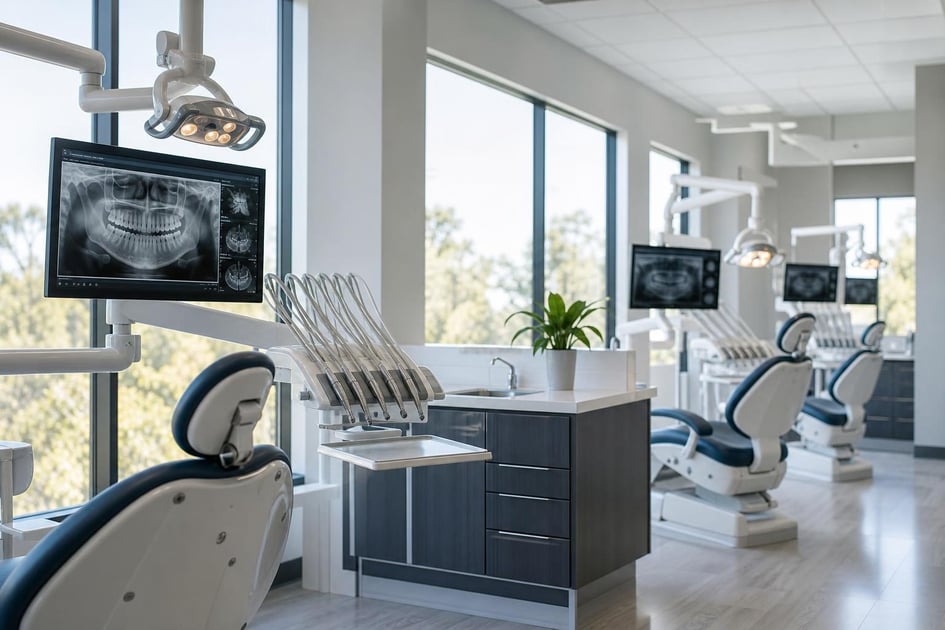
New Dental Chairs financing often includes installation and training, which lenders may roll into the loan amount. Used equipment loans usually cover the purchase price plus any immediate refurbishment, but rarely include soft costs like extended training. If you are expanding operatories, financing new chairs through a dedicated equipment loan keeps your working capital line free for payroll and supplies.
Key Insight: Lenders evaluate used equipment based on auction values, not replacement cost. A used CAD/CAM milling unit that cost $120,000 new might be valued at $45,000 in the secondary market after five years. If you finance $60,000 for that unit, the lender sees excess collateral risk, which either raises your rate or requires a larger down payment to close the gap.
Lease or Loan? How the Structure Changes the Cost
Equipment loans and leases both finance dental technology, but they treat ownership, taxes, and end-of-term options differently. A loan puts the equipment on your balance sheet immediately. You own it, depreciate it, and claim any available Section 179 deduction. A lease divides into two main types: a capital lease, which functions similarly to a loan for tax purposes, and an operating lease, where the lessor retains ownership and you deduct payments as a business expense.
For expensive technology that obsoletes quickly—like intraoral scanners with rapid software generation changes—an operating lease preserves the option to upgrade at term end. For long-lived assets like hydraulic patient chairs or panographic X-ray units, a loan or capital lease usually costs less over time because you are not paying for the lessor's residual risk.
| Feature | Equipment Loan | Operating Lease |
|---|---|---|
| Ownership at end | You own the equipment | Return, buy, or renew |
| Monthly payment | Higher (paying off full cost) | Lower (paying for use) |
| Tax deduction | Depreciation + Section 179 | Lease payments as expense |
| Collateral | Equipment secures loan | Lessor owns equipment |
| Credit impact | Shows as debt | May show as liability |
Which structure produces the lower rate depends on your tax situation and how long you plan to keep the unit. A practice in a high tax bracket may benefit more from an operating lease's immediate expensing, while a practice looking to build equity in its assets typically prefers a loan.
If you are unsure which structure fits your acquisition, talk to a specialist about your specific machine and they can model both options against your projected cash flow.
Tax Treatment for Dental Equipment in 2026
The tax year 2026 keeps Section 179 expensing available for dental equipment purchases. Under Section 179, you may elect to deduct the full purchase price of qualifying equipment in the year you place it in service, subject to annual limits and taxable income constraints. For tax year 2026, the maximum Section 179 deduction and the phase-out threshold are set by inflation-adjusted figures. The equipment must be used more than 50% for business, and the deduction cannot exceed your taxable income from the business.
Bonus depreciation is also available in 2026, though at a reduced percentage from prior years. You may take bonus depreciation on new and used qualifying property, but the percentage steps down according to the scheduled phase-out. Any remaining basis after bonus depreciation is recovered through regular MACRS depreciation over the applicable recovery period.
Because tax law changes frequently and your specific situation depends on entity structure, state taxes, and other deductions, consult a CPA before making a purchase decision based on tax benefits. The deductibility of your financing payments also differs between loans and leases, which affects after-tax cost.
Pro Tip: Time your equipment purchase so it is placed in service before December 31 to claim the deduction on your 2026 return. A January delivery pushes the tax benefit into 2027. If you are financing, get your approval lined up by early December so installation and training do not push you past the year-end deadline.
Qualifying for Dental Equipment Financing
Credit Requirements
Most equipment lenders look for a minimum personal credit score in the mid-600s, though exceptions exist for strong practices with compensating factors. A recent bankruptcy discharge, active tax lien, or judgment usually requires resolution before approval. Lenders also review your business credit profile, including any existing equipment loans, lines of credit, and trade accounts with dental suppliers.
Time in Business
Practices open for two or more years qualify most easily because they can produce tax returns and bank statements showing consistent revenue. Newer practices face additional review, though dentists with an employment history in the field and a solid business plan may still qualify with a stronger down payment or a co-signer. Provide Capital serves established practices nationwide, from solo operators to multi-location groups.
Revenue and Debt Service Coverage
Lenders calculate your debt service coverage ratio by dividing monthly or annual net operating income by your total debt payments, including the proposed equipment loan. A ratio above 1.25 is generally preferred, meaning you generate $1.25 in income for every $1.00 in debt service. If your practice runs lean or carries significant existing debt, consider paying down other obligations before applying for new equipment financing.
Revenue requirements vary by loan size. Financing a $30,000 delivery system demands less documented income than a $400,000 full-mouth reconstruction suite. Keep your financial statements current and organized to speed the review.
Key Insight: Lenders verify revenue through bank statements, tax returns, and sometimes dental software production reports. A practice that deposits insurance checks inconsistently or mixes personal and business funds extensively should clean up its books for 60 to 90 days before applying. Messy financials do not automatically disqualify you, but they add review time and can produce a more conservative offer.
Find the right financing structure
Tell us about the equipment you need and we will show you the options that fit your business.
See Your OptionsDocumentation You'll Need
Preparing your paperwork in advance shortens the approval timeline from days to hours. Most dental equipment financing applications require:
- A completed application with personal and business information
- The last three months of business bank statements
- The most recent two years of business tax returns
- A quote or invoice for the equipment, including seller information
- Proof of business entity registration and licenses
- Driver's license or other government-issued identification
For larger requests above $250,000, lenders may also request year-to-date financials, a personal financial statement, and a brief equipment description explaining how the purchase fits your practice growth. Having these ready when you apply makes same-day approval achievable.
Common Mistakes When Financing Dental Equipment
Dentists who finance equipment regularly make a handful of errors that cost them money or delay their purchase.
Shopping only on rate. The lowest rate is not always the cheapest deal. A loan with a low rate but a short term and high origination fee can cost more than a slightly higher-rate loan with no fees and a longer term. Compare the total cost of financing, including any documentation fees, UCC filing charges, and prepayment penalties.
Financing the wrong asset class. A general business term loan carries a higher rate than a secured equipment loan because it lacks collateral. If you are buying a physical asset, an equipment-specific loan almost always prices lower. Using an unsecured line of credit for a panographic unit means paying more for money you could have borrowed against the equipment itself.
Ignoring the end-of-term. With leases especially, understand what happens when the term ends. A $1 buyout lease and a fair-market-value lease produce very different final payments. If you expect to own the equipment, confirm the buyout structure in writing before signing.
Overleveraging the practice. Adding a $200,000 monthly payment to a practice already carrying heavy construction debt or practice acquisition debt strains cash flow. Before financing, model your payment against conservative revenue projections, especially if the new equipment requires a ramp-up period to generate billable procedures.
Neglecting soft costs. Installation, electrical work, training, and initial maintenance agreements add 10% to 25% above the equipment sticker price. If your loan covers only the purchase price, you will pay those costs out of pocket. Ask whether your lender can include soft costs in the financing.
What Happens After You Apply
Once you submit a complete application, the review process typically moves through three stages. First, an underwriter verifies your identity, business ownership, and credit profile. Second, the lender evaluates the equipment, reviewing the quote, seller reputation, and collateral value. Third, the underwriter structures the final terms, including rate, term, and any conditions like automatic payments or insurance requirements.
For requests under $250,000 with clean credit and clear documentation, this process can complete the same day. Larger transactions or those requiring additional verification may take 24 to 72 hours. Upon approval, you receive a term sheet or financing agreement spelling out the payment schedule, total cost, and any fees. Review it carefully, particularly the sections on default, prepayment, and insurance.
After you sign and return the agreement, the lender usually pays the equipment vendor directly. You take delivery, install the equipment, and begin using it. Your first payment typically comes due 30 to 45 days after funding. The lender files a UCC-1 financing statement to perfect its security interest in the equipment.
Throughout the life of the loan, keep the equipment insured and maintained. Defaulting on payments can trigger repossession, which damages both your credit and your ability to continue operating. If you hit cash flow trouble, contact the lender before missing a payment—many will work out a modification rather than force a default.
See what you qualify for and get a clear picture of your monthly payment before you negotiate with vendors.
Industry Context: Why Dental Equipment Costs Keep Rising
Dental practices operate in a capital-intensive environment. According to U.S. Census Bureau data on healthcare sector business investment, dental offices consistently rank among the highest-spending small healthcare businesses for equipment and technology per provider. Digital dentistry has accelerated that trend. Intraoral scanners, 3D printers for provisional restorations, and CBCT systems have moved from luxury items to standard-of-care expectations in many markets.
Supply chain adjustments and component costs continue affecting delivery times for imported imaging equipment. Practices that wait until a unit fails before replacing it may face weeks without critical technology. Financing spreads the cost over the equipment's useful life while preserving liquidity for the unexpected. That is particularly important in competitive markets where patient expectations for comfort and technology drive referral patterns.
Dental equipment financing from Provide Capital covers the full range of practice needs, from operatories and sterilization equipment to digital imaging and practice management software. Whether you are opening a new location or replacing aging technology, the equipment itself secures the loan, which helps keep your rates competitive.
Beyond the chairside technology, practices also finance the infrastructure that keeps patients comfortable. A reliable climate system matters for patient experience and equipment performance. If you are upgrading your practice facility, Commercial Hvac System financing can be bundled into your broader equipment financing strategy.
Data from the Small Business Administration show that healthcare practices, including dental offices, represent a significant share of small business equipment borrowing. That demand reflects both the high cost of entry and the ongoing need to upgrade technology. As Forbes has noted in coverage of healthcare business trends, practices that invest proactively in technology tend to retain patients and attract new ones more effectively than those running outdated equipment.
Ready to move forward?
More than 10,000 businesses have financed equipment with Provide Capital. See what you qualify for today.
Get StartedFAQ
What credit score do I need to finance dental equipment?
Most lenders prefer a personal credit score in the mid-600s or higher. Scores above 700 generally receive the best available rates. Practices with lower scores may still qualify with a larger down payment, shorter term, or additional collateral.
Can I finance used dental equipment?
Yes. Used equipment financing is common and practical, especially for reliable brands with strong secondary markets. Expect a slightly higher rate and possibly a larger down payment than new equipment. The unit's age, condition, and remaining useful life determine the exact terms.
How long can I finance dental equipment?
Terms typically range from 24 to 84 months. New equipment usually qualifies for longer terms. Shorter terms carry lower total interest costs but higher monthly payments. Match your term to the equipment's expected productive life in your practice.
Will financing dental equipment hurt my credit?
A financing application generates a hard inquiry, which may lower your score slightly for a short period. The loan itself, if paid on time, builds your business credit profile. Missing payments damages both personal and business credit and risks repossession of the equipment.
Is the interest on dental equipment financing tax-deductible?
Interest on business equipment loans is generally tax-deductible as a business expense. In addition, you may qualify for Section 179 expensing or bonus depreciation on the equipment cost itself for tax year 2026. Consult your CPA to determine the optimal strategy for your entity type and tax bracket.
Can I pay off my equipment loan early?
Many equipment loans allow early payoff, but some include prepayment penalties or minimum interest clauses. Review your loan agreement before signing. If early payoff is likely, negotiate for a simple interest loan with no prepayment penalty.
How fast can I get approved?
With complete documentation, approval can come the same day. Larger transactions or those requiring additional verification may take one to three business days. Having your tax returns, bank statements, and equipment quote ready before applying speeds the process considerably.
What happens if I default on the loan?
Default triggers the lender's right to repossess the equipment. The lender may also pursue any personal guarantee. Default damages your credit and can make future financing difficult. If you anticipate payment trouble, contact your lender immediately—many prefer to restructure rather than repossess.
Next Steps
Dental equipment financing rates vary by credit profile, equipment age and term. The best way to know exactly what your practice qualifies for is to apply with complete documentation and a specific equipment quote in hand. Provide Capital finances new and used business equipment from $5,000 to $5 million nationwide, serving dental practices with same-day approvals possible when the file is clean.
Before you sign a vendor's in-house financing offer, compare it against an independent equipment loan. Vendor plans sometimes build hidden fees or above-market rates into the payment. An outside quote gives you leverage in negotiation and often produces better terms.
Get a same-day decision on your equipment and move forward with confidence on your next practice investment.
Disclaimer: The information provided in this article is for general educational purposes only and is not financial, legal, or tax advice. Funding terms, qualifications, and product availability may vary and are subject to change without notice. Provide Capital does not guarantee approval, rates, or specific outcomes. For personalized information about your business funding options, contact our team directly.