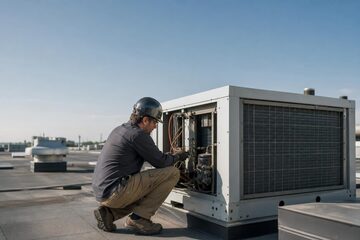

An equipment loan is almost always the better choice when you are buying a physical asset that will generate revenue for several years. A merchant cash advance is designed to solve a short-term cash-flow pinch, not to finance a long-term purchase. If you are trying to buy a dump truck, a skid steer, or an oven for your restaurant, the loan uses the equipment itself as collateral, which keeps your cost of capital lower and stretches payments across the useful life of the machine. A merchant cash advance pulls daily or weekly debits from your revenue stream until it is repaid, often in six to eighteen months, which can strain cash flow while you are still trying to earn money with the new asset.
What an Equipment Loan Actually Is
An equipment loan is a form of asset-based financing. The lender secures the debt with the equipment you are buying. Because the machine serves as collateral, the lender’s risk is lower, and that risk reduction translates into longer terms and more predictable payments for you. Provide Capital finances new and used business equipment from $5,000 to $5 million nationwide, with terms that typically run from 24 to 84 months depending on the asset type, age, and your credit profile.
The structure is straightforward. You select the equipment, the lender approves the deal and pays the vendor or private seller, and you make fixed monthly payments until the balance is satisfied. At the end of the term, you own the equipment outright. There is no large balloon payment unless you specifically choose a lease buyout structure, and there are no daily debits hitting your account.
Because the collateral is built into the deal, equipment loans often require less outside security than an unsecured working-capital loan. That matters for owner-operators who may not want to pledge their home or another business asset. For a deeper look at how the Small Business Administration views equipment funding, see SBA resources on business funding.
Already have a machine in mind?
Provide Capital finances new and used equipment from $5,000 to $5 million, with same-day decisions possible.
Apply NowWhat a Merchant Cash Advance Actually Is
A merchant cash advance, or MCA, is not a loan. It is a purchase of future receivables. A funding company gives you a lump sum today, then collects a fixed percentage of your daily credit-card batches or bank deposits until the agreed amount is repaid. The repayment period is usually short, often six to eighteen months, and the total repayment is calculated using a factor rate rather than an interest rate.
Factor rates typically range from 1.2 to 1.5, though individual offers vary. If you receive $50,000 at a factor rate of 1.3, you repay $65,000. The advance is satisfied by taking a daily holdback, commonly 10% to 20% of your card revenue, until the balance clears. There is no fixed term; if sales are strong, you pay it off faster. If sales drop, the daily bite still happens, but it takes longer. The equipment you are trying to buy does not secure the advance, so the provider prices the deal based entirely on your cash-flow history and perceived risk.
Key Insight: Because MCA repayments are fixed daily percentages, a slow sales week does not reduce your payment obligation; it only extends the calendar. That means you can still be paying off last quarter’s advance when this quarter’s tax bill or payroll lands.
Side-by-Side Comparison
The table below shows how the two products differ across the dimensions that matter most to an owner-operator mid-purchase.
| Feature | Equipment Loan | Merchant Cash Advance |
|---|---|---|
| Collateral | The equipment itself | None; secured by future revenue |
| Repayment structure | Fixed monthly payments | Daily or weekly percentage of sales |
| Typical term | 24 to 84 months | 6 to 18 months |
| Cost structure | Interest rate or finance charge | Factor rate (commonly 1.2 to 1.5) |
| Ownership at end | You own the equipment | No asset ownership; pure financing |
| Credit emphasis | Credit profile + asset value | Primarily daily revenue history |
| Best used for | Acquiring long-lived equipment | Short-term working capital gaps |
| Early payoff | Often allowed with savings | Rarely reduces total payback |
Cost Reality: A $75,000 Purchase Worked Out
Numbers tell the story better than adjectives. Imagine you need a piece of equipment that costs $75,000. You have two paths in front of you.
With an equipment loan, you might put down 10% to 20% and finance the balance over five years. Your monthly payment is fixed. You know exactly what you owe at the start of every month, which makes budgeting simple. Over the life of the loan, the total cost of capital depends on your credit profile, the age of the equipment, and the term length. Because the machine secures the note, lenders can offer competitive pricing.
With a merchant cash advance, you might receive the full $75,000 upfront with no down payment. But at a factor rate of 1.35, you now owe $101,250. The provider begins taking 15% of your daily card batches. If your business generates $8,000 a week in card revenue, that is $1,200 a week leaving your account. You could be repaying the advance for well over a year, and during that time the daily drain makes it harder to build a cash reserve for maintenance, fuel, or payroll.
The equipment loan preserves your daily cash flow. The MCA accelerates repayment by eating your revenue in real time. For a revenue-heavy business with thin margins, that daily holdback can turn a profitable month into a break-even month.
By the Numbers: A $75,000 equipment loan with a five-year term and competitive collateral-backed pricing can cost significantly less over time than a $75,000 MCA at a 1.35 factor rate, even when the MCA carries no nominal interest. The difference lies in the term length and the daily holdback structure.
How Collateral Changes Your Risk
Collateral is not just a lender protection. It is a pricing lever that works in your favor. When the equipment backs the deal, the lender can recover value if the unexpected happens. That recovery option lowers the lender’s risk, and lower risk means better terms for you.
An MCA has no collateral. The provider is buying a claim on your future sales. If your sales disappear, the provider still has a legal claim to your receivables, but there is no physical asset to repossess and resell. That absence of collateral raises the provider’s risk, and they price accordingly. You pay for that risk through a higher effective cost of capital and a compressed repayment schedule.
There is also a personal risk difference. Equipment loans are often non-recourse to the owner’s personal assets beyond standard guarantees. MCA contracts can include confessions of judgment or blanket lien provisions that put your entire business bank account at risk. Always read the documentation carefully.
Pro Tip: If you are buying a titled asset such as a truck or trailer, the lender files a lien directly on the title. That formal collateral registration often produces better pricing than an untitled asset, and it keeps your other business property unencumbered. For heavy equipment purchases, Dump Trucks financing and Skid Steers financing are common examples where title liens apply.
What Lenders Actually Look For
Equipment Loan Qualification
Equipment lenders evaluate three things: your credit history, your time in business, and the equipment’s value. Most lenders prefer two or more years in operation, though some will work with younger businesses if the owner’s personal credit is strong. Credit scores generally need to be in the mid-600s or higher, but because the equipment secures the deal, a lower score does not always kill the application. It may simply shift the down-payment requirement or the rate.
The equipment itself matters. A new excavator from a name-brand dealer holds value better than a 20-year-old niche machine from a defunct manufacturer. Lenders know resale values, and they price the deal based on what they could recover in a default. That is why new and late-model used equipment often wins faster approvals.
Provide Capital offers same-day approvals when the application is clean and the equipment details are complete. That speed matters when you are trying to close a deal at auction or beat another buyer to a private sale. See what you qualify for and get a decision before the machine sells to someone else.
MCA Qualification
MCA providers care most about your revenue volume and consistency. They want to see three to six months of bank statements or card-processing reports showing steady deposits. Credit score requirements are often looser than equipment lenders, and time-in-business minimums can be shorter. Some providers work with businesses open only six months.
The trade-off is cost and structure. Because the provider relies entirely on cash-flow velocity, a seasonal dip or a lost major account can trigger severe stress. According to U.S. Census Bureau business formation data, many young firms experience irregular revenue in their first two years, which makes the fixed-percentage MCA structure especially dangerous for new purchases.
See what you qualify for
The equipment itself secures the financing, which keeps rates competitive. Checking your options takes minutes.
Check Your OptionsTax Treatment in 2026
For tax year 2026, equipment loans and merchant cash advances receive very different treatment. When you finance equipment with a loan, you generally own the asset from the start. That means you can depreciate it, and you may be able to claim Section 179 expensing or bonus depreciation, subject to the limits the IRS sets for 2026.
Bonus depreciation continues its scheduled phase-down to 20 percent in 2026 under current law. The Section 179 deduction limit is indexed annually for inflation. Because these figures change yearly, you should confirm the exact 2026 ceiling with your CPA before you file. Never claim a deduction based on last year’s limit.
An MCA has no depreciation benefit because you do not acquire an asset. The principal portion of your repayments is not deductible, and the factor-rate portion is treated as a cost of capital rather than interest in the traditional sense. Your accountant will record it differently on your books. If you are weighing the tax impact of a $75,000 equipment purchase, the ability to write off all or part of the cost in 2026 can swing the total economic value well below the sticker price. For the latest federal guidance, consult Reuters business coverage of tax legislation or speak directly with your tax advisor.
New vs. Used Equipment Considerations
The new-or-used decision affects both your loan terms and your total cost of ownership. New equipment commands the lowest rates because lenders know the resale value. Warranties are intact, maintenance costs are predictable, and the asset will last the full term of the loan. The downside is depreciation; the moment you take delivery, the value drops.
Used equipment saves money upfront and can still qualify for solid financing. Provide Capital finances both new and used assets. A three-year-old machine with documented maintenance records often appraises well enough to secure competitive terms. The sweet spot for many buyers is equipment that is two to four years old with under 3,000 hours. It has already taken the steepest depreciation hit, but it still has plenty of productive life and will be accepted by most lenders as collateral.
The key is verifiable hours, clear title, and a fair market value that supports the loan amount. MCA providers do not distinguish between new and used because they are not collateralizing an asset. They are simply advancing against your revenue. That means you could technically use an MCA to buy used equipment, but you would still face the same compressed repayment and daily holdback problems. The collateral advantage disappears entirely.
When Each Option Makes Sense by Industry
Construction and Heavy Equipment
A contractor buying a $65,000 excavator or a $45,000 skid steer needs that machine to generate revenue for five to seven years. An equipment loan matches the payment schedule to the revenue window. Daily MCA holdbacks would cripple cash flow during winter slowdowns or between jobs. Transportation equipment financing works on the same principle: the asset earns while you pay.
Restaurants and Food Service
A restaurant owner replacing a failing oven during the holiday rush might feel pressure to move fast. An MCA can fund in 24 to 48 hours, which sounds appealing. But a $35,000 advance against daily card revenue during your busiest season means you are repaying the advance exactly when you need cash most. An equipment loan closed with same-day approval preserves your holiday cash flow and still puts the oven in your kitchen before the weekend rush.
Healthcare and Dental
Medical equipment often costs $100,000 or more and lasts a decade. The tax benefits of ownership, combined with the low collateral-backed rates, make loans the clear choice. MCA daily debits from a practice’s revenue stream would interfere with insurance reimbursement cycles, which are already uneven.
Agriculture and Forestry
Seasonality makes MCAs especially risky. A logger or farmer who takes an advance in September may still be paying it back the following spring when revenue is thin. An equipment loan with fixed monthly payments lets you budget through the off-season.
Mistakes Owners Make When Choosing
The most common error is confusing speed with suitability. Yes, an MCA can fund faster than some traditional loans. But if you are buying equipment that will work for five years, a six-month repayment window is structurally mismatched.
Another mistake is comparing only the factor rate to a loan’s interest rate. They are not the same unit of measure. A 1.3 factor rate on a six-month advance can carry an effective annual cost far above a five-year equipment loan. Owners sometimes choose the MCA because the number looks smaller, not because the math is better.
A third mistake is failing to verify the equipment’s condition and title before applying. Lenders will conduct their own valuation, but you should know the serial number, hour meter reading, and any lien history before you start. A clean application moves faster.
What Documentation You Need
For an equipment loan, gather your business tax returns, a current profit-and-loss statement, and a personal financial statement. The lender will also need an invoice or purchase agreement for the equipment, the serial number, and photos if it is used. If you are buying from a private party, be ready to prove clear title.
If the equipment is being imported or has an out-of-state title, add time for registration and lien perfection. Lenders will not release funds until they can verify a clean title, so starting that paperwork early prevents closing delays.
For an MCA, the list is shorter but no less invasive. Expect to provide three to six months of business bank statements and your card-processing statements. Some providers also want a voided check and a copy of your lease. They are looking for deposit consistency, not asset quality.
What Happens After Approval
With an equipment loan, approval triggers a title check and lien filing. The lender pays the vendor or seller directly, and you take delivery. The initial payment is usually due 30 to 45 days later. Over the term, you build equity in the asset and can often refinance or trade up as your business grows.
With an MCA, approval triggers a lump-sum deposit, sometimes within 24 hours. Repayment begins almost immediately through your card processor or ACH withdrawals. There is no equity building, no title filing, and no asset to sell if you need liquidity later. When the advance is paid off, the relationship ends unless you take another one. Get a same-day decision on your equipment and keep your revenue stream intact.
Ready to move forward?
More than 10,000 businesses have financed equipment with Provide Capital. See what you qualify for today.
Get StartedFAQ
Can I use a merchant cash advance to buy equipment?
Yes, but it is usually a costly choice. An MCA is not secured by the equipment, so you repay through daily revenue holdbacks over a short term. An equipment loan uses the machine as collateral, which spreads payments over years and preserves your operating cash.
Does an equipment loan require a down payment?
Often, yes. Down payments typically range from 0% to 20% depending on your credit profile, time in business, and the equipment age. Strong credit and new equipment can sometimes qualify for zero down.
Is an equipment loan easier to qualify for than an MCA?
It depends on your strengths. If you have strong, consistent revenue but weak credit, an MCA may be easier. If you have decent credit and are buying a high-quality asset, an equipment loan is often straightforward. The collateral helps offset credit challenges.
What credit score do I need for an equipment loan?
Most equipment lenders prefer scores in the mid-600s or higher. Because the equipment serves as collateral, some lenders will work with lower scores by adjusting the down payment or term. Rates vary by credit profile, equipment age, and term length.
How fast can I get funded with an equipment loan?
Same-day approvals are possible when your application is complete and the equipment details are clear. Funding usually follows within one to three business days after title verification. Provide Capital can move quickly when the paperwork is in order.
Can I pay off an equipment loan early?
Most equipment loans allow early payoff, though some may include a prepayment penalty or a minimum interest charge. Ask your lender for the specific policy before you sign. MCA contracts rarely reduce your total payback if you repay early.
What happens if I default on an equipment loan?
The lender can repossess the equipment to recover losses. Because the asset has resale value, lenders usually prefer repossession over litigation. MCA defaults can lead to confessions of judgment or liens on your bank accounts because there is no asset to reclaim.
Are equipment loan payments tax deductible?
For tax year 2026, you may be able to deduct the interest portion of your payments. You may also be eligible for Section 179 expensing or bonus depreciation on the equipment itself. Confirm the exact 2026 limits with your CPA before filing.
Next Step
If you are staring at a purchase order or an auction listing and wondering how to pay for it, start with the structure that matches the asset. Equipment loans align the repayment with the revenue the machine generates. Merchant cash advances solve short-term gaps, but they are an expensive way to buy long-lived tools. Gather your equipment details, your last two years of financials, and talk to a specialist about your specific machine. A same-day approval can put the keys in your hand without draining tomorrow’s revenue.
Disclaimer: The information provided in this article is for general educational purposes only and is not financial, legal, or tax advice. Funding terms, qualifications, and product availability may vary and are subject to change without notice. Provide Capital does not guarantee approval, rates, or specific outcomes. For personalized information about your business funding options, contact our team directly.