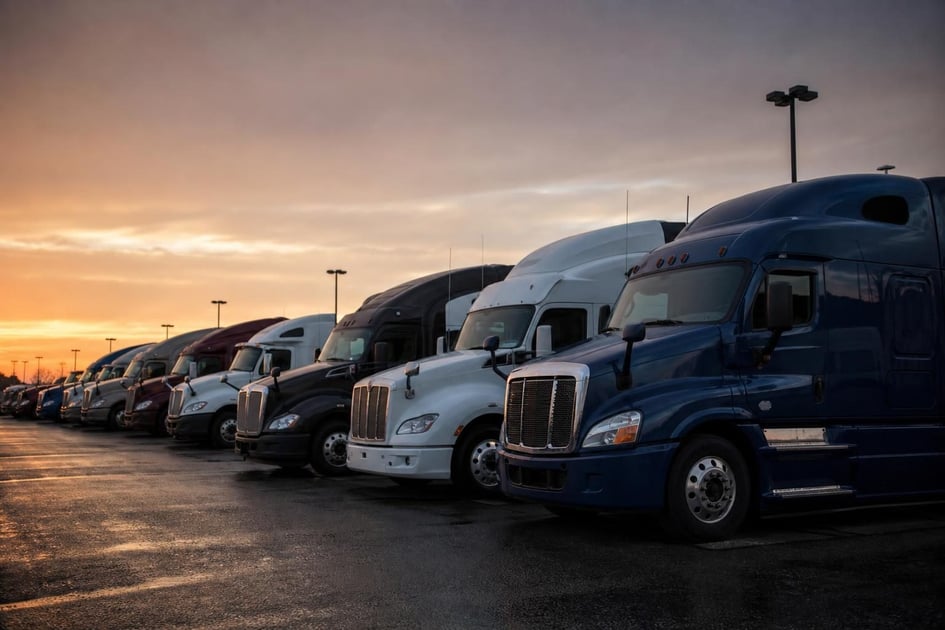
Yes, you can finance a semi truck without a down payment. Equipment lenders like Provide Capital structure deals where the truck itself serves as collateral, which means qualifying owners can preserve working capital and still take delivery. The trade-off is that no-down-payment programs typically require stronger credit, documented revenue, and a truck that holds its value. Rates vary by credit profile, equipment age and term length, so the exact cost depends on your specific situation.
Key Insight: Lenders view the truck as the security, not your home or personal savings. Because the equipment is the collateral, borrowers with solid credit and two or more years in business regularly secure 100% financing on Class 8 tractors, even on used units up to ten years old.
How No-Down-Payment Semi Truck Financing Works
Equipment financing for semi trucks is a secured business loan or lease. The lender purchases the truck from the dealer or private seller and retains a lien until the final payment clears. You make fixed monthly payments, and at the end of the term you own the title outright. With a no-down-payment structure, the lender advances the full purchase price plus applicable soft costs such as delivery fees or a warranty package.
The amount you can borrow ranges from $5,000 to $5 million, which covers everything from a single used day cab to a small fleet of sleeper tractors. Same-day approvals are possible when your documentation is complete, though complex deals involving multiple trucks or borrowers with challenged credit may take one to three business days.
Because the lender's risk is tied to the resale value of the truck, the age, mileage, and condition of the unit matter. A three-year-old Freightliner with 300,000 miles and a clean maintenance record is easier to finance at 100% than a fifteen-year-old model with undocumented engine work. Lenders also prefer name-brand trucks with broad dealer networks because remarketing is simpler if the unit has to be repossessed and resold.
What Lenders Actually Evaluate
No-down-payment programs are not automatic. Underwriters look at four pillars: credit history, time in business, equipment quality, and cash flow. Each pillar carries weight, and a weakness in one can sometimes be offset by strength in another.
Credit Profile
A personal FICO score in the mid-600s or higher is the typical threshold for 100% financing. Scores above 700 open access to longer terms and more competitive rate tiers. Lenders also review business credit if it exists, along with any past bankruptcies, tax liens, or judgments. A prior bankruptcy that has been discharged for more than two years, with re-established credit, is generally not a disqualifier.
Time in Business
Most lenders prefer at least two years of operating history. That history demonstrates you can generate revenue, manage expenses, and survive seasonal dips. Startups and new businesses face tougher requirements and usually need a significant down payment or a strong cosigner, which is why no-down-payment options focus on established carriers.
Equipment Specifications
The truck's year, make, model, mileage, and maintenance history all influence approval odds. Engines with overhaul records, recent DOT inspections, and no open recalls improve the lender's confidence. If you are buying from a dealer, a factory-backed warranty can also help. Private-party purchases are financeable, but the lender may require an independent inspection before funding.
Revenue and Bank Statements
Expect to provide three to six months of business bank statements and possibly tax returns or profit-and-loss statements. Lenders want to see that your monthly revenue can cover the new payment plus fuel, insurance, maintenance, and your existing obligations. A common rule of thumb is that the equipment payment should not consume more than 15% to 20% of your monthly gross revenue.
Pro Tip: Gather your DOT authority paperwork, current insurance quotes, and the truck's VIN and spec sheet before you apply. Applications that arrive complete move faster, and underwriters are more likely to approve 100% financing when they see organized financials from day one.
New vs. Used: Which Works Better for Zero Down?
Both new and used semi trucks can be financed with no down payment, but the terms differ. New trucks command higher prices, which means larger monthly payments, yet they come with manufacturer warranties, lower maintenance costs in the first few years, and stronger residual values. Lenders like that predictability.
Used trucks cost less upfront, which keeps payments manageable, but they carry more mechanical risk. A used truck with 500,000 miles may need an engine overhaul within your first year of ownership, so budget for reserves. Lenders will cap the age and mileage they will finance at 100%; most draw the line at ten years old or 750,000 miles, whichever comes first. Some will stretch to twelve years for low-mileage, well-documented units.
If you are expanding a fleet, consider mixing one new unit with one quality used unit. The new truck gives you reliability for your highest-mileage lanes, while the used truck keeps the average payment down. Semi Trucks financing through Provide Capital covers both strategies.
Equipment Loan vs. Lease: A Side-by-Side Look
Financing a truck without a down payment can take the form of a loan or a lease. The right structure depends on how long you plan to keep the truck, how many miles you run annually, and whether you want to claim depreciation on your tax return.
| Feature | Equipment Loan (100% Financing) | Equipment Lease (FMV or $1 Buyout) |
|---|---|---|
| Ownership | You own the truck after the final payment | FMV: return or buy at fair market value; $1: you own it |
| Down payment | Often $0 for qualified borrowers | Typically $0 to one payment in advance |
| Monthly payment | Higher than a lease on the same term | Lower than a loan for the same truck |
| Tax treatment | Depreciation and interest deduction | FMV: deduct payments as expense; $1: depreciation |
| Mileage restrictions | None | FMV leases may impose annual mileage caps |
| Customization | No restrictions | FMV leases may limit modifications |
| Best for | Long-haul owners who run high miles | Operators who refresh trucks every 3–5 years |
If you intend to run the same truck for seven to ten years, a loan usually wins. If you prefer to upgrade every four years to avoid major repair bills, a fair-market-value lease keeps payments low and transfers residual risk to the lessor. A $1 buyout lease splits the difference: you own the truck at the end, but the payment is closer to a loan.
By the Numbers: Provide Capital finances new and used business equipment from $5,000 to $5 million. Same-day approvals are possible for borrowers with complete files, and the equipment itself is the collateral, which keeps rates competitive across credit tiers.
Tax Treatment for the 2026 Tax Year
The tax benefits of owning a semi truck can be substantial, but the rules change annually and depend on your corporate structure. For the 2026 tax year, the IRS allows businesses to deduct the cost of qualifying equipment through Section 179 and bonus depreciation, subject to annual limits and taxable income constraints. Because these limits are adjusted for inflation and because Congress periodically revises depreciation schedules, the exact dollar cap for 2026 should be confirmed with a CPA before you file.
If you lease instead of buy, the structure matters. A true lease, where the lessor retains ownership, generally allows you to deduct lease payments as a business expense. A finance lease or $1 buyout lease is treated more like a loan for tax purposes, meaning you claim depreciation rather than deducting the full payment. Either way, consult a CPA who understands trucking to model the after-tax cost before you sign.
Additional deductions include fuel, insurance, maintenance, permits, and tolls. The key is keeping meticulous records. Separate business and personal mileage, retain receipts, and log every load. A clean paper trail protects you in an audit and ensures you capture every dollar you are entitled to claim.
Worked Cost Examples
Numbers make the decision real. Here are two scenarios for a qualified borrower seeking 100% financing on a single Class 8 tractor. Rates vary by credit profile, equipment age and term length, so treat these as illustrative only.
Scenario A: Used sleeper cab, $85,000 purchase price
- Term: 60 months
- Estimated monthly payment: $1,650–$1,850
- Total cost of ownership: payment plus roughly $0.18–$0.22 per mile for fuel, maintenance, and insurance
Scenario B: New day cab, $165,000 purchase price
- Term: 72 months
- Estimated monthly payment: $2,600–$2,900
- Total cost of ownership: payment plus warranty coverage for the first three years, reducing early maintenance risk
In both cases, the borrower puts $0 down at closing. The lender pays the seller directly, and the first payment is usually due 30 to 45 days later. Budget for insurance, which on a financed semi truck typically runs $12,000 to $20,000 per year depending on your driving record, cargo, and operating radius.
At this point, you know what the payment landscape looks like. If these ranges fit your cash flow, the next step is to see what you qualify for and get a same-day decision on your equipment.
Industry-Specific Use Cases
Semi truck financing without a down payment serves several niches within the broader transportation sector. Owner-operators running under their own authority use it to scale from one truck to two without draining the operating account. Small fleets replace aging units during peak season to avoid downtime. And specialized haulers—refrigerated, flatbed, or heavy-haul—acquire niche equipment that commands premium rates.
The transportation industry is overwhelmingly composed of small operators. According to recent industry data, more than half of all carriers operate only one truck, and the vast majority run fewer than ten units. That fragmentation means most buyers are not large corporations with dedicated treasury departments; they are individuals making high-stakes capital decisions with personal credit on the line. Equipment financing levels that playing field by letting the truck itself secure the deal. Transportation equipment financing is designed around that reality.
Seasonal patterns also matter. Refrigerated carriers often buy in late winter ahead of the produce season, while dry van operators may shop in late summer to position for holiday freight. After years of soft demand, freight rates are climbing, making this a better time to invest in capacity. Planning your purchase around your revenue cycle makes the first few payments easier to absorb.
Common Mistakes to Avoid
First, do not shop for the truck before you know what you can finance. Falling in love with a specific unit at a dealership, then discovering your credit or revenue only supports a smaller payment, wastes time and strains dealer relationships. Get prequalified first.
Second, do not ignore the total cost of ownership. The monthly payment is just one line item. Fuel, tires, oil changes, DOT inspections, and unexpected repairs can add $40,000 to $60,000 per year on a single truck. Run the full spreadsheet.
Third, do not skip the inspection on a used truck. A $300 pre-purchase inspection by a certified diesel mechanic can reveal $15,000 in hidden engine or after-treatment issues. Lenders may require it, but even if they do not, pay for it yourself.
Fourth, do not stretch the term too far to lower the payment. A 72-month term on a used truck with 600,000 miles means you may still owe money when the engine needs a rebuild. Match the term to the expected useful life of the equipment.
Documentation You Will Need
Lenders move faster when you arrive organized. At minimum, gather the following before you apply:
- Three to six months of business bank statements
- Current driver's license and DOT medical card
- DOT authority letter or MC number
- Current insurance quote or policy showing physical damage and cargo coverage
- The truck's VIN, year, make, model, mileage, and seller information
- Recent tax returns or profit-and-loss statements (usually for deals above $150,000)
- A voided business check for ACH setup
If you are buying from a private seller, the lender will also need a bill of sale and may require a title search to confirm no existing liens. Dealers usually handle this paperwork in-house.
What Happens After Approval
Once approved, the lender issues a funding letter or purchase order to the seller. You review and sign the finance agreement, which spells out the payment amount, term, and any prepayment penalties or late fees. The lender then wires funds directly to the seller or issues a check. You take delivery, activate your physical damage insurance, and the first payment is typically due within 30 to 45 days.
During the loan, the lender holds the title as lienholder. You are responsible for maintenance, insurance, and registration. After the final payment, the lender releases the lien and mails you the clear title. The whole process from application to funding can be as fast as 24 to 48 hours for straightforward deals.
Pro Tip: If you are adding the truck to an existing motor carrier authority, notify your insurance agent the moment the VIN is assigned. Coverage must be bound before the lender releases funds, and a delay in insurance can push back your delivery date by several days.
Frequently Asked Questions
Can I finance a semi truck with no money down if I have bad credit?
It is difficult but not impossible. Borrowers with credit scores below 600 usually need a down payment of 10% to 20% or a strong cosigner. If your credit is challenged, focus on newer trucks with strong resale value and documented revenue that covers the payment comfortably.
Does the truck have to be new to qualify for 0% down?
No. Used trucks are regularly financed at 100% as long as they meet the lender's age and mileage caps. Most lenders prefer units under ten years old with fewer than 750,000 miles. Well-maintained trucks from major manufacturers like Freightliner, Peterbilt, Kenworth, and Volvo qualify most easily.
How long are the terms for semi truck financing?
Terms typically range from 36 to 72 months. New trucks often qualify for the longest terms because their residual value supports the extended payback period. Used trucks usually max out at 60 months, though low-mileage units may stretch to 66 or 72 months.
Can I finance the taxes and fees too?
In many cases, yes. Soft costs such as sales tax, title fees, delivery charges, and extended warranties can be rolled into the loan or lease. The total financed amount still needs to fit within the lender's advance guidelines relative to the truck's value.
What if I want to pay off the loan early?
Most equipment loans allow prepayment, but some carry a prepayment penalty during the first 12 to 24 months. Read your agreement carefully. If early payoff is important to you, ask your financing specialist about it before you sign.
Do I need a commercial driver's license to qualify?
Yes. Lenders require a valid CDL and current DOT medical card. If you are an owner-operator running under your own authority, you will also need proof of active DOT authority and appropriate insurance.
Is a lease always cheaper than a loan?
Not necessarily. Lease payments are usually lower, but a loan builds equity. At the end of a loan, you own a paid-off asset. At the end of a fair-market-value lease, you return the truck or buy it at market price. The cheaper option depends on how long you keep the truck and how many miles you run.
Can I finance multiple trucks at once with no down payment?
Yes, though the underwriter will evaluate your entire fleet and revenue base. Adding a second or third truck changes your insurance, maintenance, and compliance obligations. Be ready to show that your current revenue and contracts can support the additional payments.
Moving Forward
Semi truck financing with no down payment is a practical tool for established owner-operators and small fleets who want to grow without draining cash reserves. The key is matching the right truck, the right term, and the right lender to your specific revenue and credit profile. Gather your documents, run the total cost of ownership, and review the SBA guidance on planning your business to ensure your financial projections are solid before you apply. Choose a structure that leaves room for maintenance, fuel, and the unexpected.
Provide Capital finances new and used business equipment nationwide, from $5,000 to $5 million, with same-day approvals possible. Whether you are adding your first truck or expanding a small fleet, get a same-day decision on your equipment and talk to a specialist about your specific machine. If you are also considering support vehicles, Tow Truck financing is available under the same equipment-secured structure.
Disclaimer: The information provided in this article is for general educational purposes only and is not financial, legal, or tax advice. Funding terms, qualifications, and product availability may vary and are subject to change without notice. Provide Capital does not guarantee approval, rates, or specific outcomes. For personalized information about your business funding options, contact our team directly.